
Last updated November 21, 2026
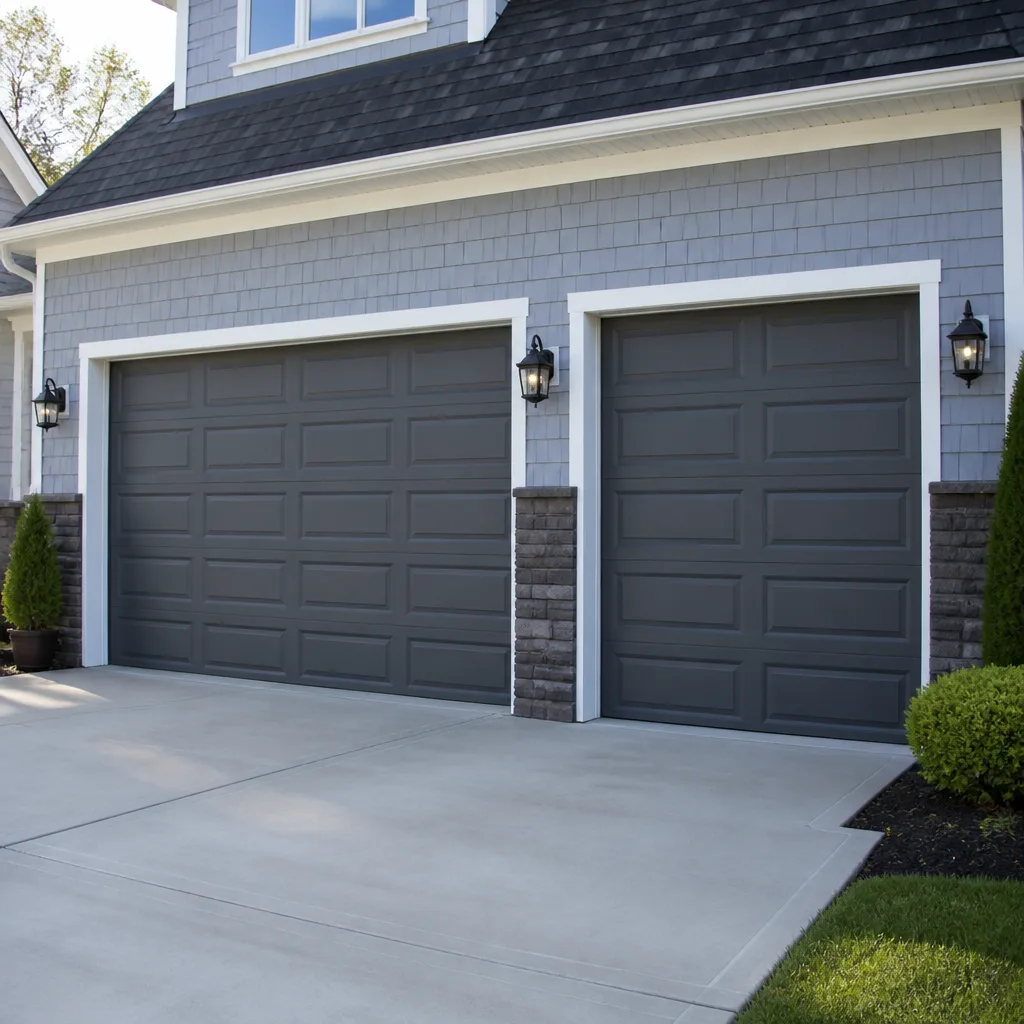 Raised-panel steel
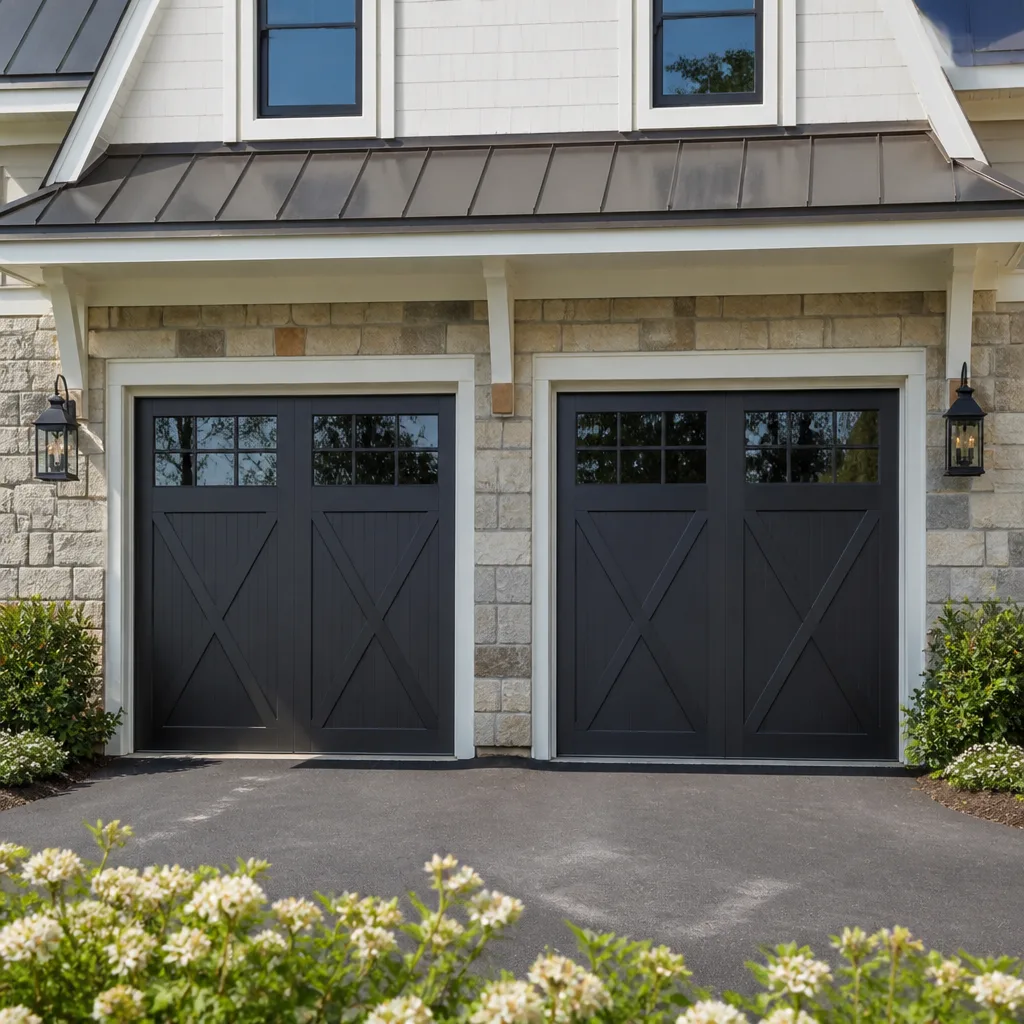 Carriage house
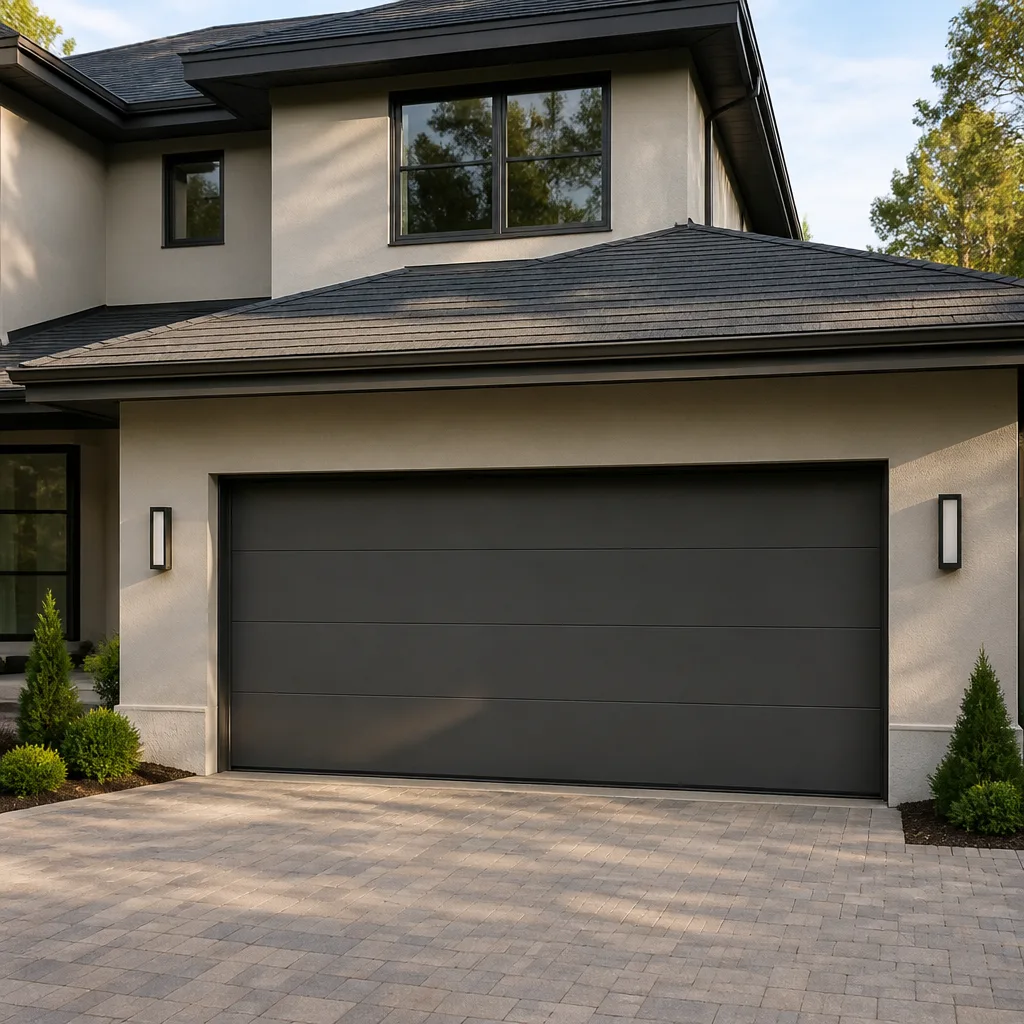 Modern flush
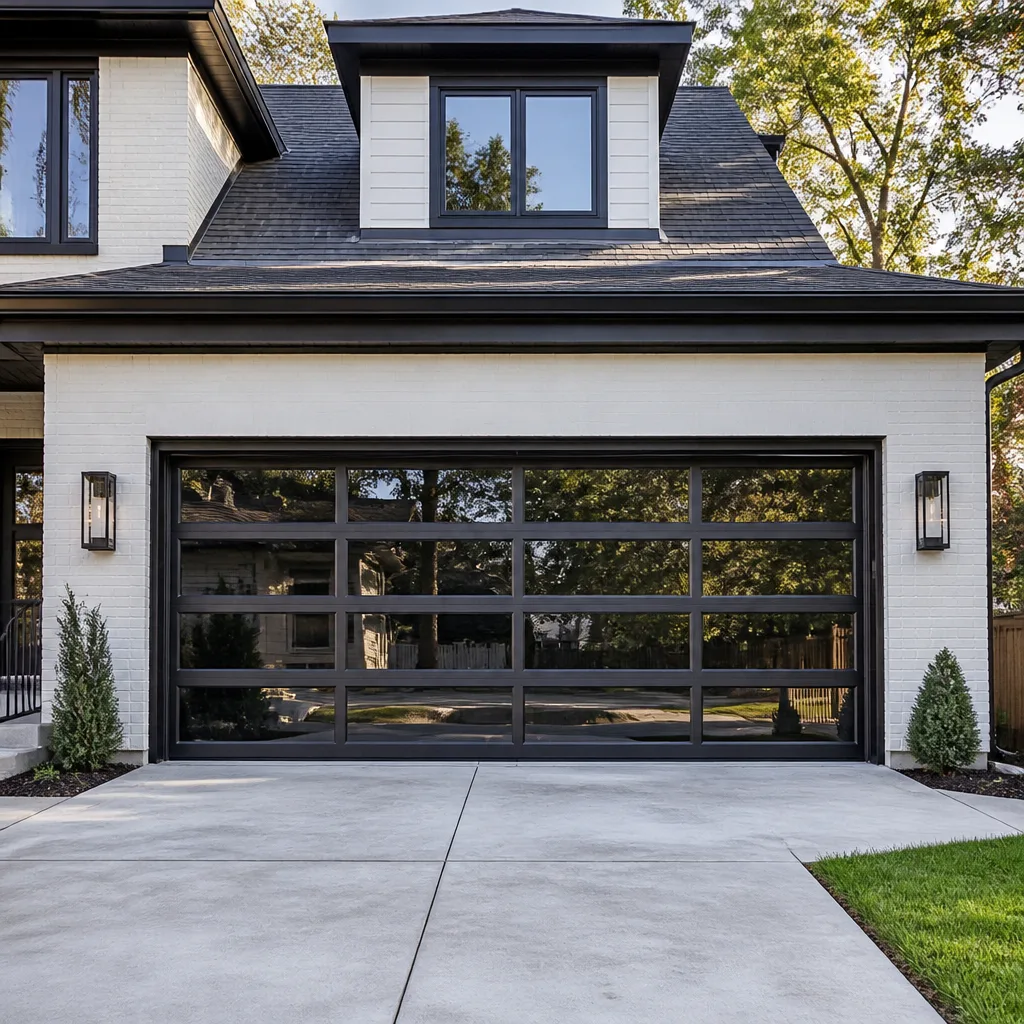 Full-view glass
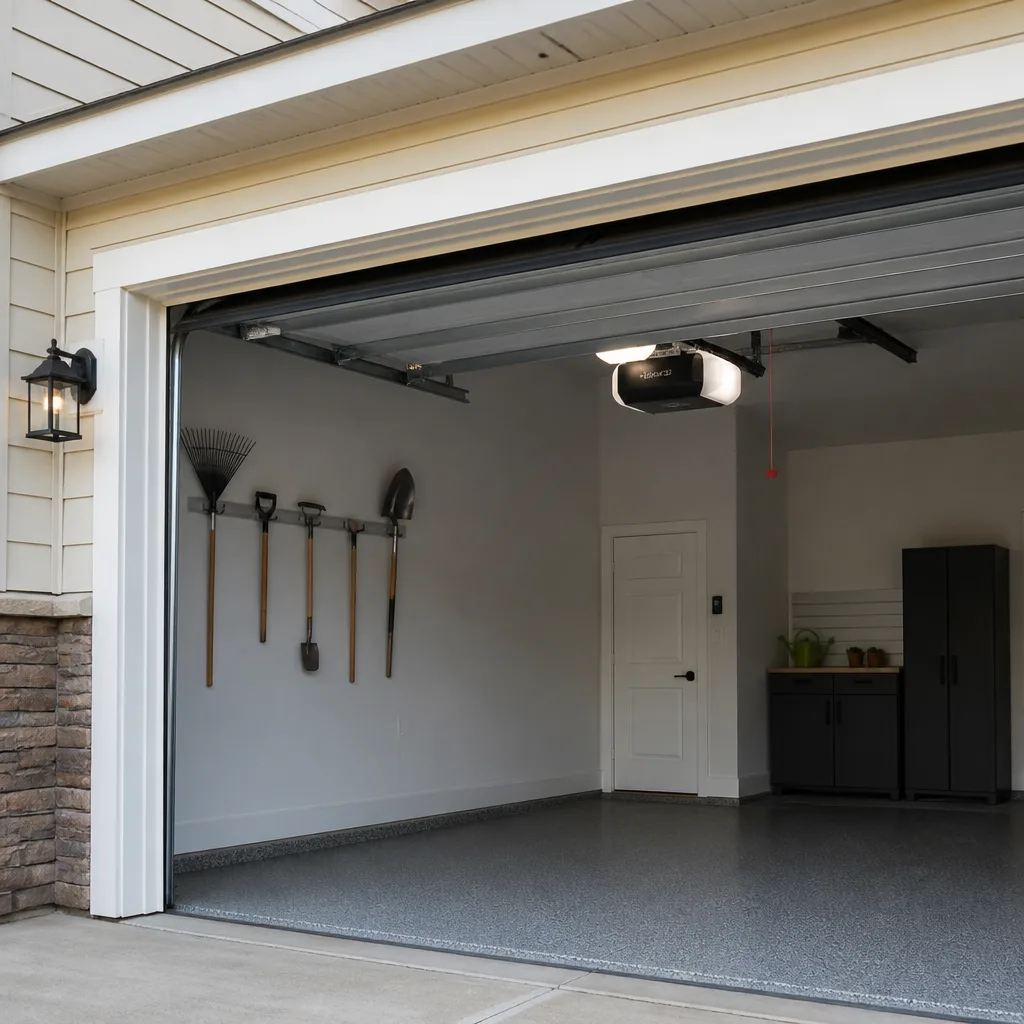 LiftMaster openers
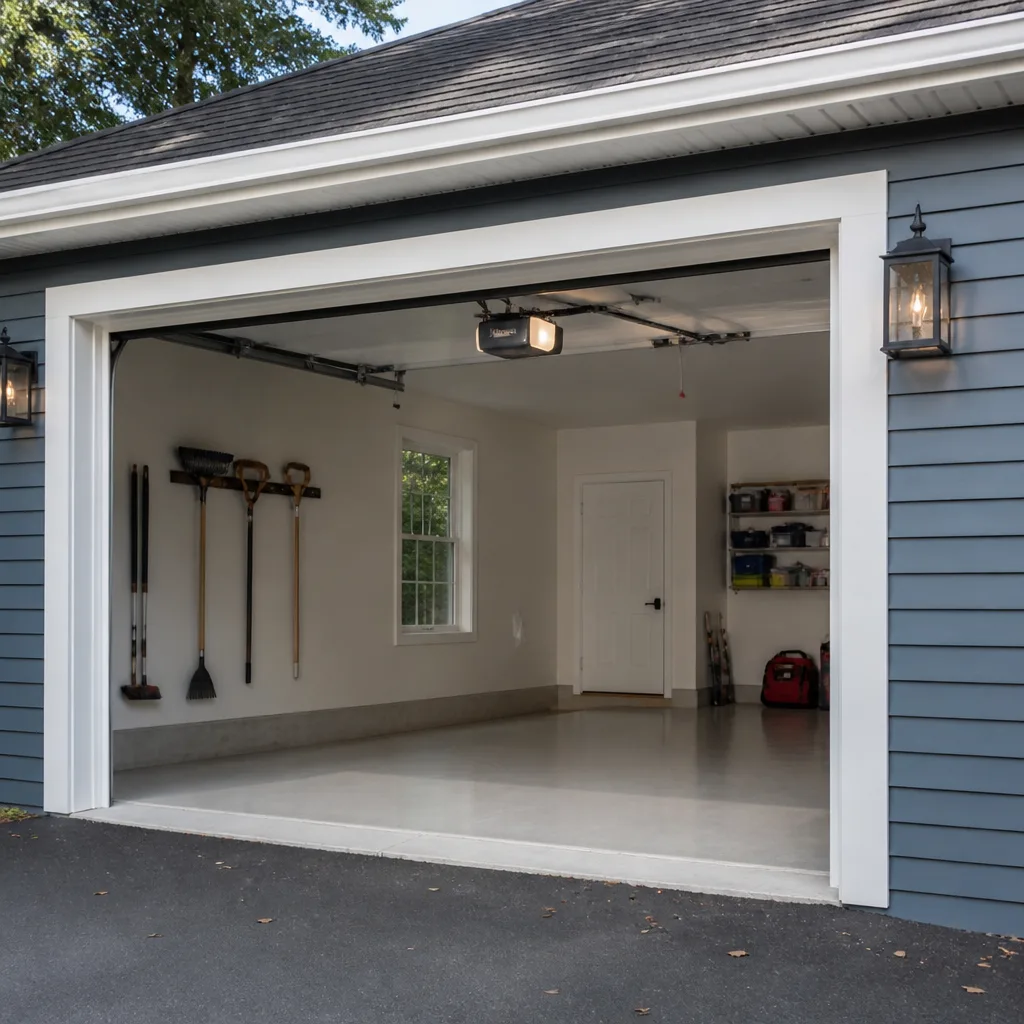 Chamberlain openers
Full 25-point door and opener safety check with every visit - springs, cables, rollers, tracks, and your LiftMaster or Chamberlain opener included
You get a price before we start. It does not change when the pro arrives.
Get your free estimateDIY vs Professional Garage Door: The Cape Coral Homeowner’s Decision Guide
You can find a video tutorial for almost any garage door repair. What no tutorial will do is pull a permit, stand behind the work, or keep your wind-mitigation paperwork clean. That’s the part most DIY-versus-pro arguments skip. In Cape Coral, the garage door is the largest moving object on the house and the one most scrutinized during a home sale, an insurance review, or a storm inspection. The real question here isn’t whether you’re handy enough. It’s whether the work you’re about to do is something a homeowner can legally and safely self-perform in Lee County, and where that line sits. This guide draws it clearly, walks through what’s genuinely safe to tackle yourself, and shows you where a bad DIY job quietly costs more than the repair. You’ll finish knowing exactly which tasks belong in your hands and which belong to a specialist.
Quick Answer
For Cape Coral homeowners, the short version is this: routine upkeep like lubrication, visual inspection, and tightening loose hardware is safe to do yourself, but spring repair, opener electrical work, and any full door installation should go to a professional. Installation and structural work typically require permitting and inspection in a wind zone, and an unpermitted job can surface during a title search or insurance review. Spring work specifically is a physics problem with serious injury risk, not a skill flex.
Styles & brands we work with
- Raised-panel steel
- Carriage house
- Modern flush
- Full-view glass
- LiftMaster openers
- Chamberlain openers
Table of Contents
- The Florida code line: what you can legally DIY in Lee County
- The torsion spring hard stop
- What you can safely do yourself in Cape Coral
- The insurance and wind-mitigation angle
- The cost-benefit math: DIY plus correction versus one professional job
- Brand matters: why a specialist skips the guesswork
- When to stop and call a professional
- Frequently asked questions
The Florida code line: what you can legally DIY in Lee County
Here’s the part no tutorial covers: not all garage door work is yours to perform, even if you’re capable. In Cape Coral and across Lee County, a full garage door replacement is a building-permit item that’s inspected, and the inspection isn’t a formality. Take an honest look at where the line falls for your situation.
Broadly, the split looks like this:
- Generally acceptable for a homeowner: lubrication, tightening visible bolts, replacing a remote battery, cleaning tracks, and swapping a photo-eye sensor bracket back into alignment.
- Typically requiring a permit and inspection: a complete door replacement, changes to the door’s anchoring, and any modification affecting how the door resists wind loads. These are the jobs the building department signs off on.
- Not a homeowner job regardless of rules: torsion spring and cable work, plus opener electrical wiring that ties into household circuits. These are safety and code territory you shouldn’t enter.
We’re deliberately not quoting code sections or specific permit numbers here, because they shift and because the correct authority is always your local building department. Before you buy a door off a truck or start a structural change, call the City of Cape Coral’s building department and ask two questions: does this require a permit, and does it require an inspection. A five-minute call settles what a week of research can’t. Winds in this area drive how doors are anchored and rated, and a permitted, inspected install keeps your paperwork aligned with the reality of what’s bolted to your house. For anything on the structural side, that’s skilled work we handle through garage door installation so the job matches the code from the first bolt.
The torsion spring hard stop
Spring work is the one place where the DIY debate ends abruptly. A torsion spring holds the entire weight of your door in tension, and when that tension releases unpredictably, the stored energy goes wherever the failure directs it. This is why spring repair is the most dangerous and most commonly botched garage door job there is. It’s not a matter of confidence or a good pair of gloves. It’s stored mechanical energy that doesn’t negotiate.
What a “DIY spring kit” leaves out of its marketing:
- The required winding bars are specialized tools, not the screwdrivers and pry bars a kit sometimes implies. Improvised tools are where serious hand and arm injuries happen.
- Extension and torsion springs are matched to door weight. The wrong spring gauge overloads the opener, strains the cables, and can fail again quickly. Guessing the size is guessing the failure point.
- Cable tension is released and reset in sequence. Get the sequence wrong and the door can come down or the cables can whip free.
- There’s a right way to secure the door before you touch anything. Skip it and you’re working under a load that can move without warning.
We treat this as a hard stop, and so should you. A trained technician works with the door properly blocked, the right winding tools, and matched replacement springs. Our technicians have up to 15 years of experience, and springs are handled in-house because it’s the highest-skill job in the trade. If you’re seeing a snapped spring, a door that won’t lift, or a loud bang followed by a slack door, stop operating it and call us. You can reach a specialist through garage door repair and get the fix done without putting your hands near the winding cone.
What you can safely do yourself in Cape Coral
A lot of garage door maintenance is genuinely reasonable to do yourself, and doing it protects the expensive parts. The key is knowing which tasks are safe and which are traps that look safe. Task number one is lubrication, and it’s the highest-value thing you can do for a door living through Southwest Florida summers.
- Lubricate the moving parts. Use a purpose-made garage door or white lithium spray on hinges, rollers, and the torsion spring coils. Do it a few times a year; the heat and humidity here dry out grease faster than homeowners expect.
- Inspect and re-tighten visible nuts and bolts. Vibration loosens fasteners over time. A basic wrench set and a slow pass over the brackets and hinges catches small problems before they grow.
- Clean and test the safety reverse. Put a small object on the ground where the door closes and confirm it reverses. Check the photo-eye sensors aren’t blocked by a broom or storage box.
- Wipe down the door panels. Keep the finish clean and look for paint chips on steel doors. Here, sun exposure is the enemy, not road salt, so touching up faded or chipped paint protects the door’s skin.
- Replace the opener remote battery and re-pair a remote. Pure housekeeping, zero risk, and it solves a surprising number of the “my door won’t open” calls we get.
Notice what’s not on the list: anything involving springs, cables, or the opener’s internal wiring. For humidity-driven hardware, choose a lubricant rated for moving parts rather than a general household oil, and keep dust and yard debris out of the tracks. A Clean sweep and a light coat of the right spray are most of the battle in Cape Coral.
The insurance and wind-mitigation angle
This is the section that saves homeowners the most grief, and it’s the one competitors rarely mention. In Florida, homeowners insurance premiums are tied in part to wind-mitigation inspections, and those inspections look at how your home’s openings are protected and how they’re documented. An unpermitted garage door installation can create a mismatch between what’s on your house, what’s on your permit record, and what your insurer’s inspector records.
Where that mismatch bites:
- Wind-mitigation credits. If your insurer gives credit based on a verified, permitted install, an undocumented door may not qualify the same way, and that can affect your premium.
- Claims review. After storm damage, insurers look at whether work was done to code. Unpermitted structural changes can complicate a claim or push the cost back onto you.
- Resale. A title search during a home sale can flag unpermitted work. What felt like a weekend project becomes a negotiating point or a scramble to retroactively permit years later.
We can’t promise how any specific insurer will treat a given door, and neither should anyone else. But the pattern is consistent: paperwork that matches the physical work protects you. A permitted installation, done by a professional and inspected, keeps your record clean. That’s a real reason the “DIY is always cheaper” assumption falls apart in Cape Coral. If you’re weighing a replacement, a specialist can walk you through the document side as part of the job through garage door installation. And for an opener that’s failing, the safe route is garage door opener repair rather than a home-wiring project.
The cost-benefit math: DIY plus correction versus one professional job
Homeowners usually compare two numbers: the price of a professional job versus the price of parts. That comparison leaves out the most common real-world outcome, which is DIY attempt plus professional correction. Here’s the honest way to run the math before you start.
When a DIY job goes sideways, the correction usually costs more than the original professional job would have, because the tech now has to undo and redo. Common examples:
- A mis-sized spring that fails again means springs bought twice, plus the repair that fixes the setup.
- A forced opener pushed past a jammed door can burn out the motor or damage the rails, turning one repair into two.
- An unpermitted install may need to be permitted and re-inspected, so you pay for the install and then for the correction.
- A door knocked off its track during a DIY panel swap often needs new hardware, cable reset, and alignment.
Price ranges shift by door, brand, and job, so a written estimate from a specialist is what actually tells you the number. What we can say with confidence: when a job crosses into springs, opener internals, or a full replacement, the DIY path usually carries a correction cost you won’t see until something fails. Our technicians have up to 15 years of experience, and the diagnosis comes first, so you find out exactly what’s wrong before parts are ordered. For the best route to an accurate number, get a free estimate and compare it against parts plus the realistic chance of a callback. Estimates are free, and the price is quoted and agreed before any work starts. Call (877) 792-6011 to get a written number.
Brand matters: why a specialist skips the guesswork
Part of the DIY versus pro decision is brand fluency. A door is a system, and the parts, springs, openers, and hardware have to match. A homeowner who’s handy with tools still often guesses at which spring fits a Clopay door or which opener pairs with an older Wayne Dalton setup, and guessing is where a “simple” fix becomes a repeat repair. A specialist who works on a specific brand has the diagnosis down before tools come out.
We work across the eight most commonly installed residential brands: LiftMaster, Chamberlain, Genie, Clopay, Amarr, Wayne Dalton, Craftsman, and Raynor. That range matters for a few practical reasons:
- Correct part the first time. We know which spring spec, roller, or panel matches the brand and model, so we’re not ordering by trial and error.
- Opener systems. LiftMaster and Chamberlain (the myQ ecosystem) cover most of the smart-home integrated openers, and Craftsman and Genie cover a lot of older homes. We handle both without brand-specific guesswork.
- Installation that matches the door. A Clopay or Amarr door, for instance, has its own anchoring and hardware rhythm. Installing it to spec keeps the system balanced and quiet.
Garage doors are all we do, so every job is a door job rather than a side call between other trades. That focus is why we can tell you in minutes whether a targeted repair beats a replacement. Start with a brand-matched diagnosis at Cape Coral Garage Door Repair Pros and we’ll take it from there.
When to stop and call a professional
Some signs say “keep going” and some say “put the tools down.” Call us when any of these are true:
- A snapped torsion or extension spring. The door may be held only by the opener or cables. Don’t run it.
- A door off its track or a cable that’s come loose. Cables under tension are dangerous to handle.
- The door won’t open or close at all, or reverses on its own. It could be the opener, a sensor, or a spring.
- You’re replacing the whole door. This crosses into permitting and inspection territory.
- The opener needs new internal wiring or a motor swap. Electrical work has its own risks.
- A panel was damaged and you’re not sure the door still balances.
The pattern is simple: springs, cables, electrical, and structural work go to a specialist. Everything else you can handle. When in doubt, a diagnosis is cheaper than a correction.
See the difference
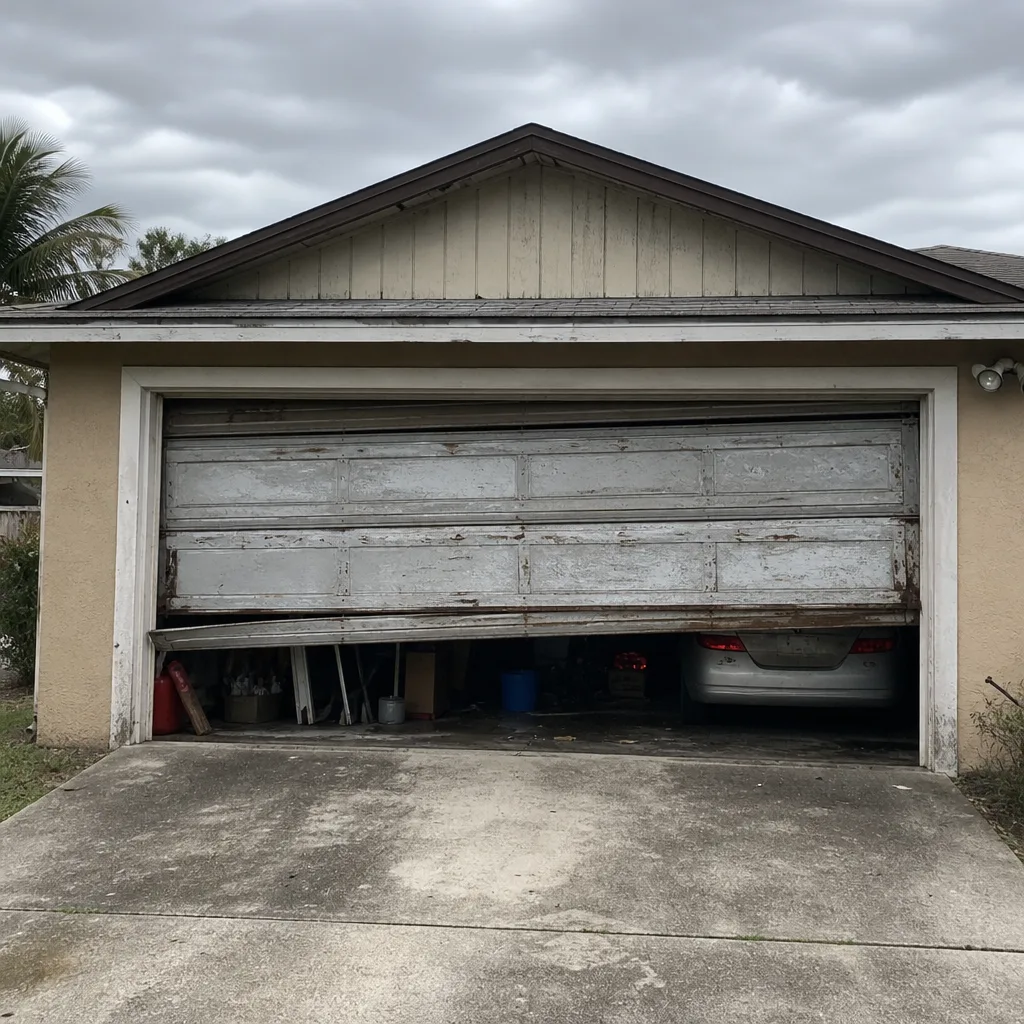 Before
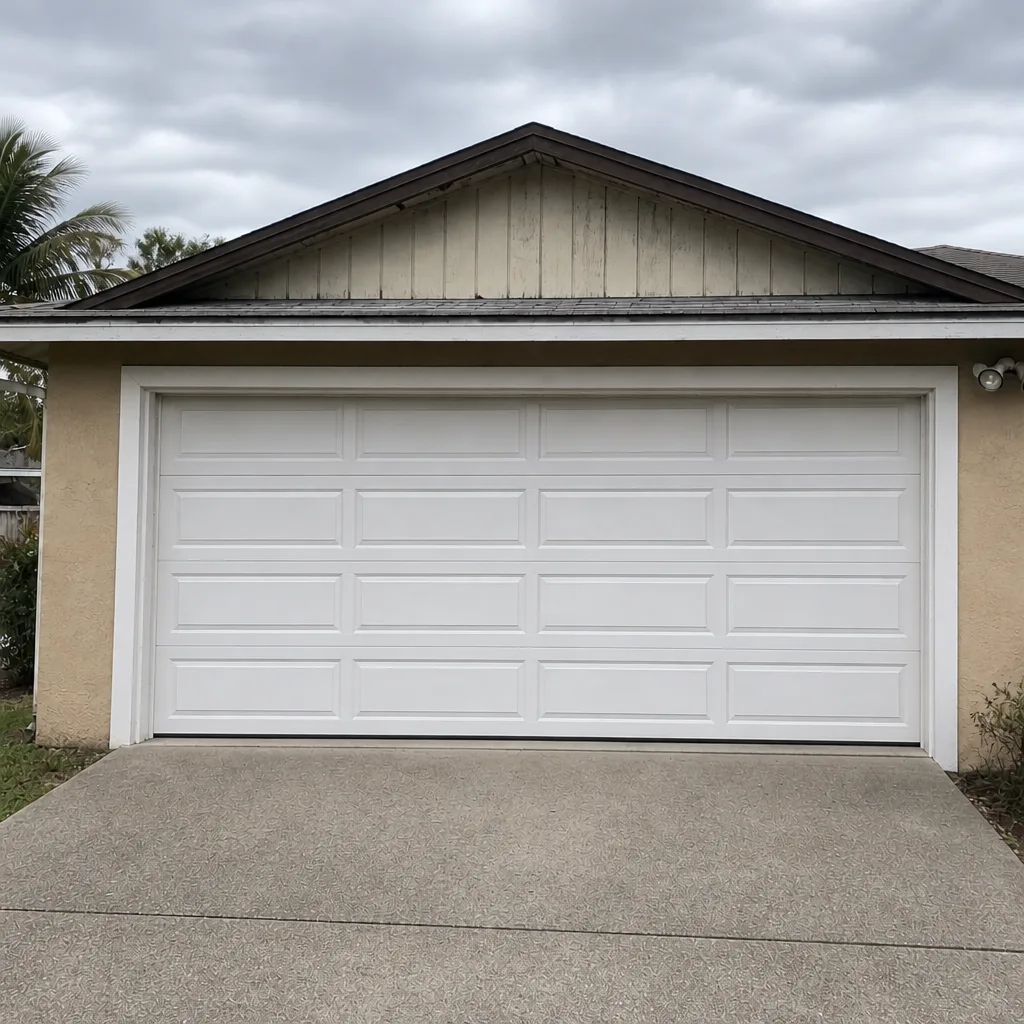 After
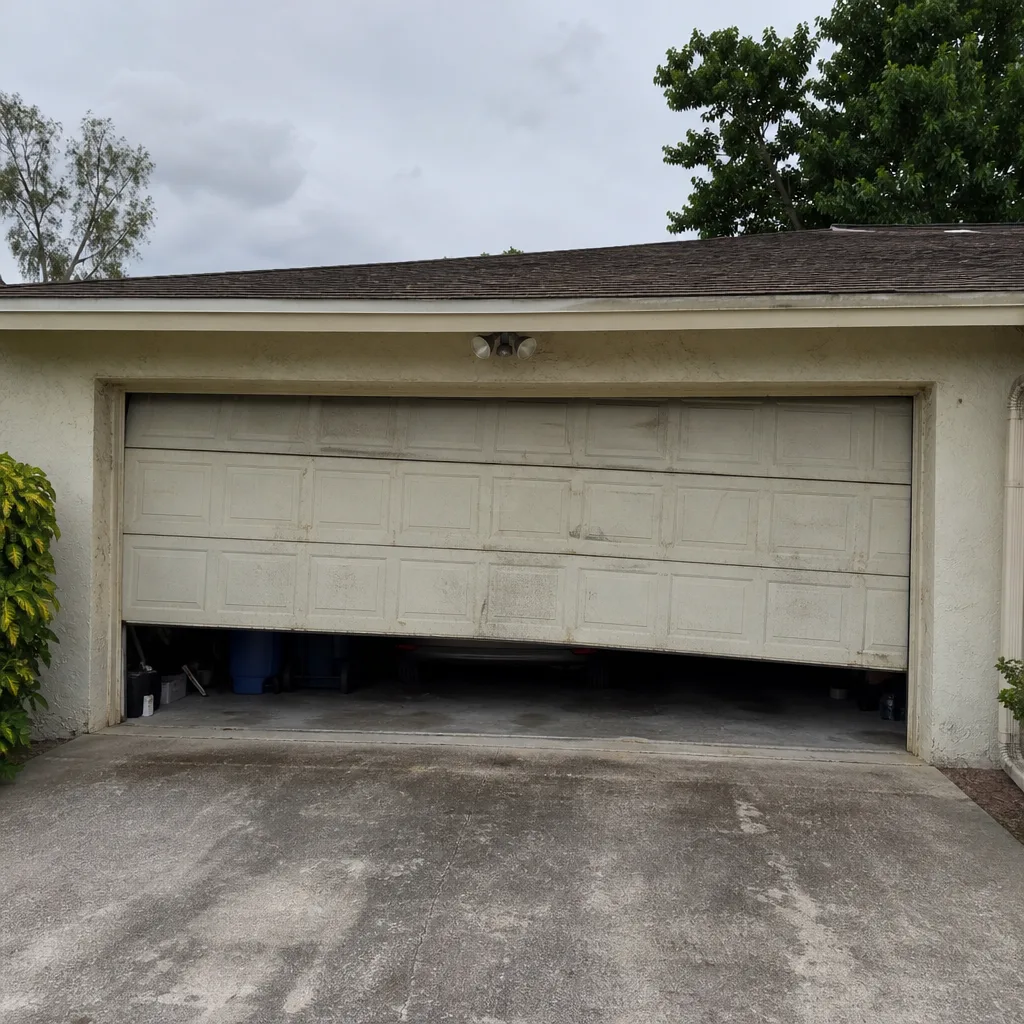 Before
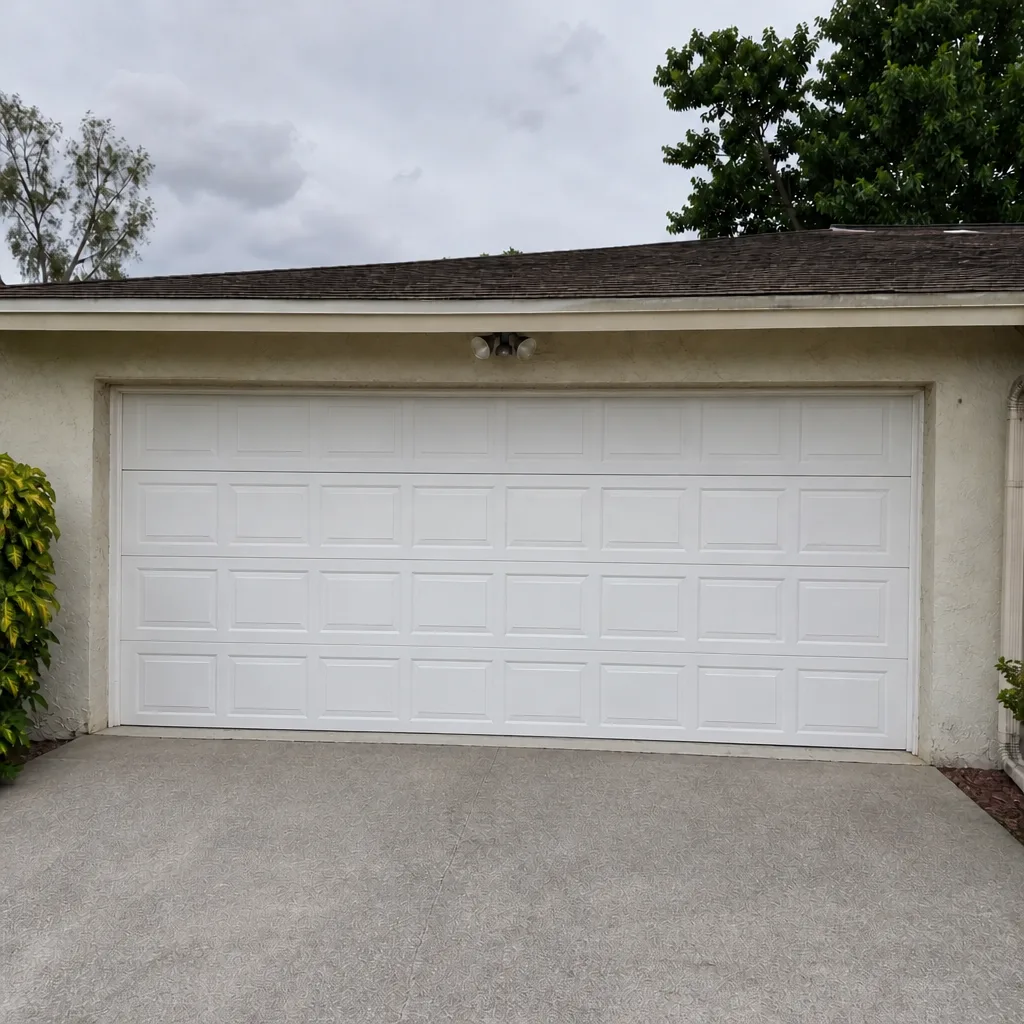 After
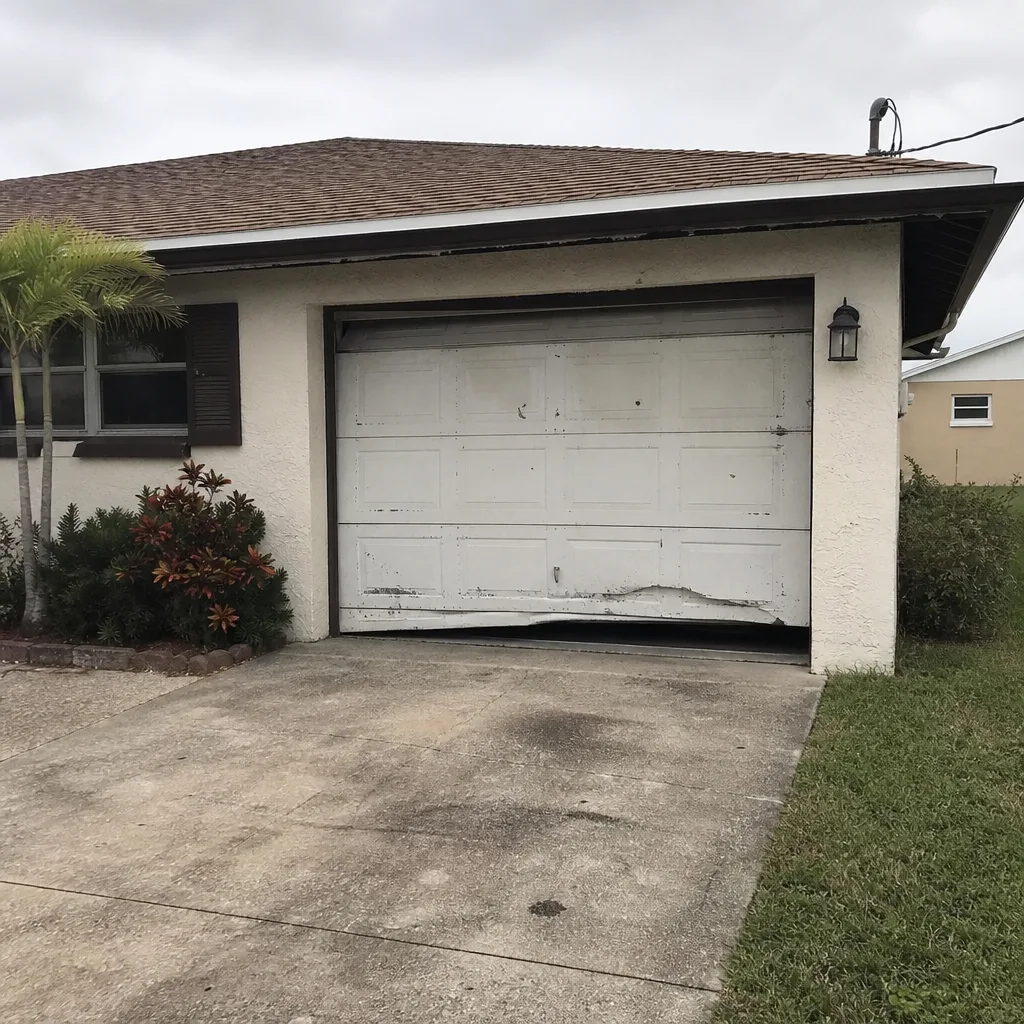 Before
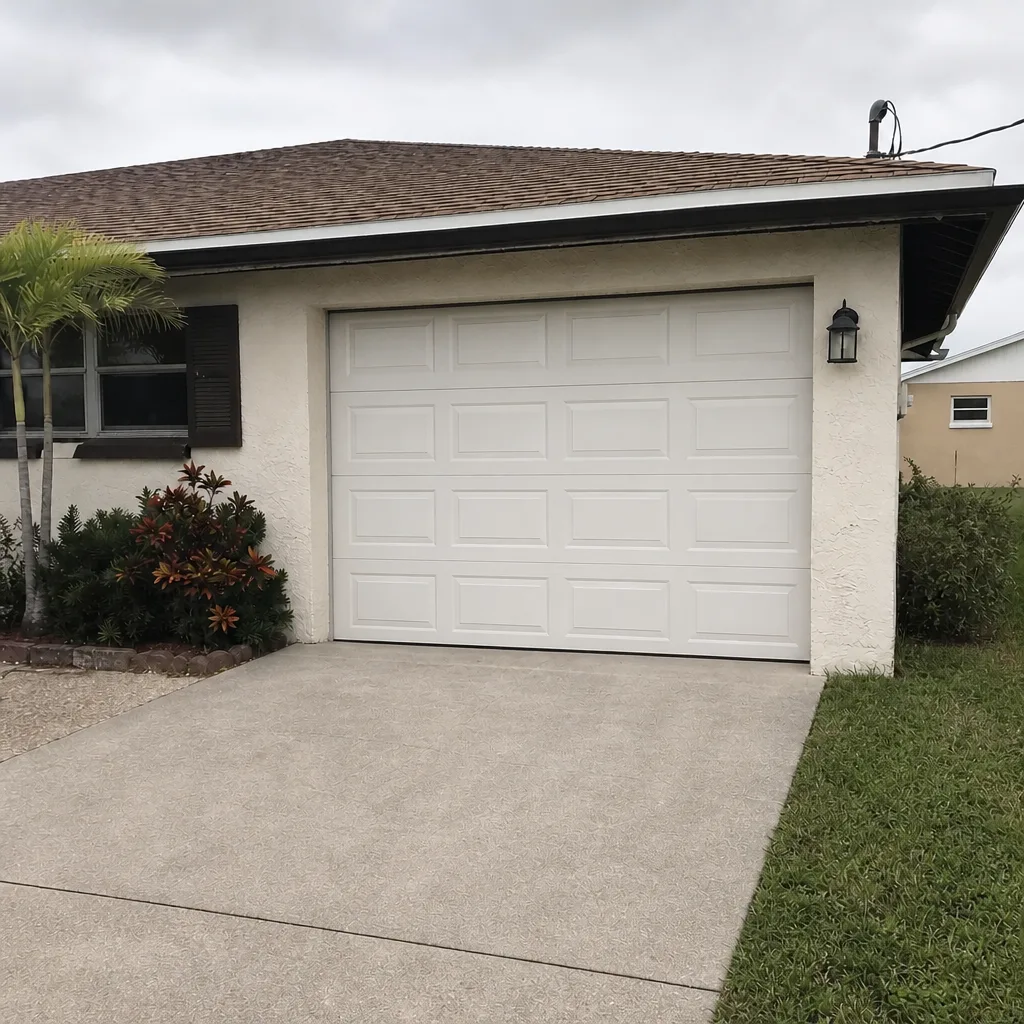 After
Common Mistakes to Avoid
- Buying a DIY spring kit instead of a matched spring. A kit that looks right can be the wrong gauge for your door, and the wrong spring overloads everything. Matching the spring to the door weight is where it succeeds or fails.
- Assuming a permit isn’t needed for a full door replacement. In Cape Coral, a replacement is typically a permitted, inspected item, and unpermitted work can surface at resale. Confirm with the city before you buy a door.
- Forcing an opener past a jammed or broken door. It burns out motors and strains rails. Stop and diagnose first.
- Lubricating with the wrong product or skipping it entirely. Household oils can attract grit; humidity here dries out grease quickly. Use a door-rated lubricant a few times a year.
- Replacing a whole door when a targeted repair would do. A brand-matched diagnosis often finds a panel or hardware fix that keeps the existing door.
- Ignoring the wind-mitigation paperwork. Unpermitted improvements can muddy a wind-mitigation inspection and complicate insurance review.
- Tightening a cable that’s come loose. Cables hold tension and can injure when they slip. Leave them to a technician.
When to Call a Professional
Call a professional the moment a job crosses into springs, cables, opener internals, or a full replacement. Those are the tasks with real injury risk or permit consequences, and they’re the ones where a bad DIY attempt costs more than the job. A door off its track, a cable that’s come loose, a spring that snapped, or an opener that stops reversing are all signs to stop and get eyes on it. Routine upkeep like lubrication and a loose-bolt pass is yours, and it’s worth doing. Everything else belongs to a specialist.
Cape Coral Garage Door Repair Pros offers free estimates in Cape Coral and covers springs, openers, panels, hardware, and new installs. Our technicians have up to 15 years of experience, and we handle the job with a written price agreed before work starts. Call (877) 792-6011. We answer 24/7. Fast dispatch from 7am to 7pm, Sunday through Friday.
Frequently Asked Questions
Usually not without a permit and inspection. A full garage door replacement in Cape Coral and across Lee County is typically a permitted, inspected item because it affects how the door resists wind loads. Confirm the exact requirement with the City of Cape Coral’s building department before you buy a door, and plan for an inspection after the install. If you’d rather not sort the paperwork, we handle the process, and estimates are free. Call (877) 792-6011 for an exact quote.
No, not for a homeowner. A torsion spring holds the full weight of the door in tension, and releasing or resetting that tension without the right tools and matched springs is how serious injuries happen. A DIY spring kit often skips the specialized winding tools and the weight-matching step. This is the job to hand to a specialist every time. Call (877) 792-6011 and we’ll handle it, with the price agreed before work starts.
Lubrication, a visual inspection, tightening visible nuts and bolts, cleaning the tracks, testing the safety reverse, and replacing a remote battery are all safe for a homeowner. Use a door-rated lubricant on hinges, rollers, and spring coils, and do it a few times a year in Southwest Florida’s heat. Keep the tracks clear of debris and check the photo-eye sensors. Anything touching springs, cables, or opener wiring is where you stop. If something looks off, call (877) 792-6011 for a free estimate.
It can. Unpermitted work can create a mismatch between your house, your permit record, and what a wind-mitigation inspection records, which may affect credits or a claims review after a storm. We can’t speak for any specific insurer’s decision, but a permitted, inspected install keeps your paperwork aligned with the physical door. That’s a real reason to go the professional route on a replacement. Call (877) 792-6011 to talk through the job.
Most major brands do, because matching the spring spec, opener, and hardware to the brand and model avoids trial-and-error ordering. We work on LiftMaster, Chamberlain, Genie, Clopay, Amarr, Wayne Dalton, Craftsman, and Raynor, so we’re not guessing at which part fits your door. A brand-matched diagnosis usually tells you in minutes whether a targeted repair beats a replacement. Call (877) 792-6011 for a free estimate and a straight answer.
For parts-only jobs like a new remote or a light lubrication pass, DIY is genuinely cheaper. But for springs, openers, or a full replacement, the DIY path often turns into a DIY attempt plus a professional correction, and that usually costs more than the original job would have. The correction has to undo the mistake first. A written estimate tells you the real number before you commit, and the price is quoted and agreed before any work starts. Call (877) 792-6011 for an exact quote, and estimates are free.
The Bottom Line
The DIY versus pro decision for a garage door in Cape Coral isn’t really about skill level. It’s about where the line sits between safe owner upkeep and work that carries real injury risk or permit consequences. Lubrication, loose bolts, sensor checks, and remote batteries are yours. Springs, cables, opener internals, and full replacements are not. A permitted, inspected install keeps your insurance record and your resale clean, and a brand-matched diagnosis skips the guesswork that turns a small fix into a repeat repair. Garage doors are all we do, and our technicians have up to 15 years of experience. Call (877) 792-6011 for a free estimate. We answer 24/7. Fast dispatch from 7am to 7pm, Sunday through Friday.
Written by the team at Cape Coral Garage Door Repair Pros.