
Last updated November 21, 2026
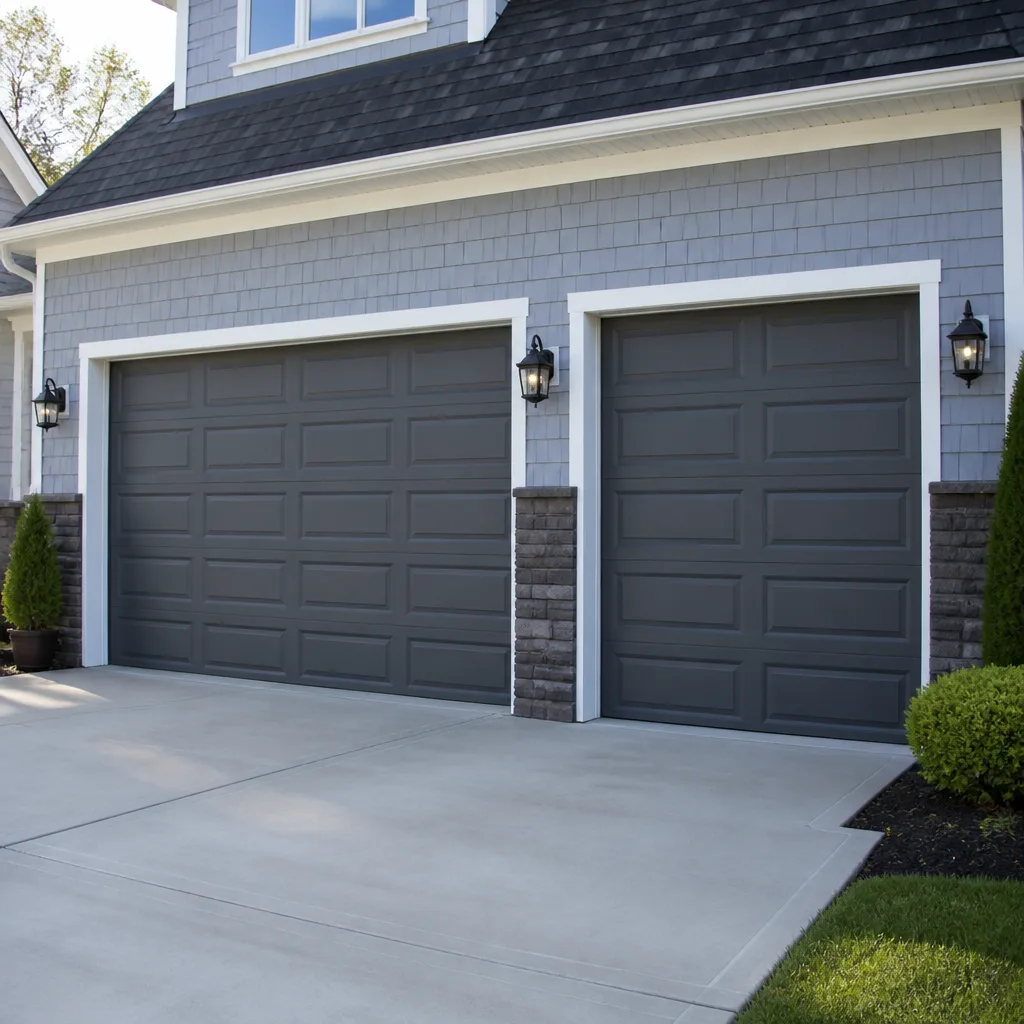 Raised-panel steel
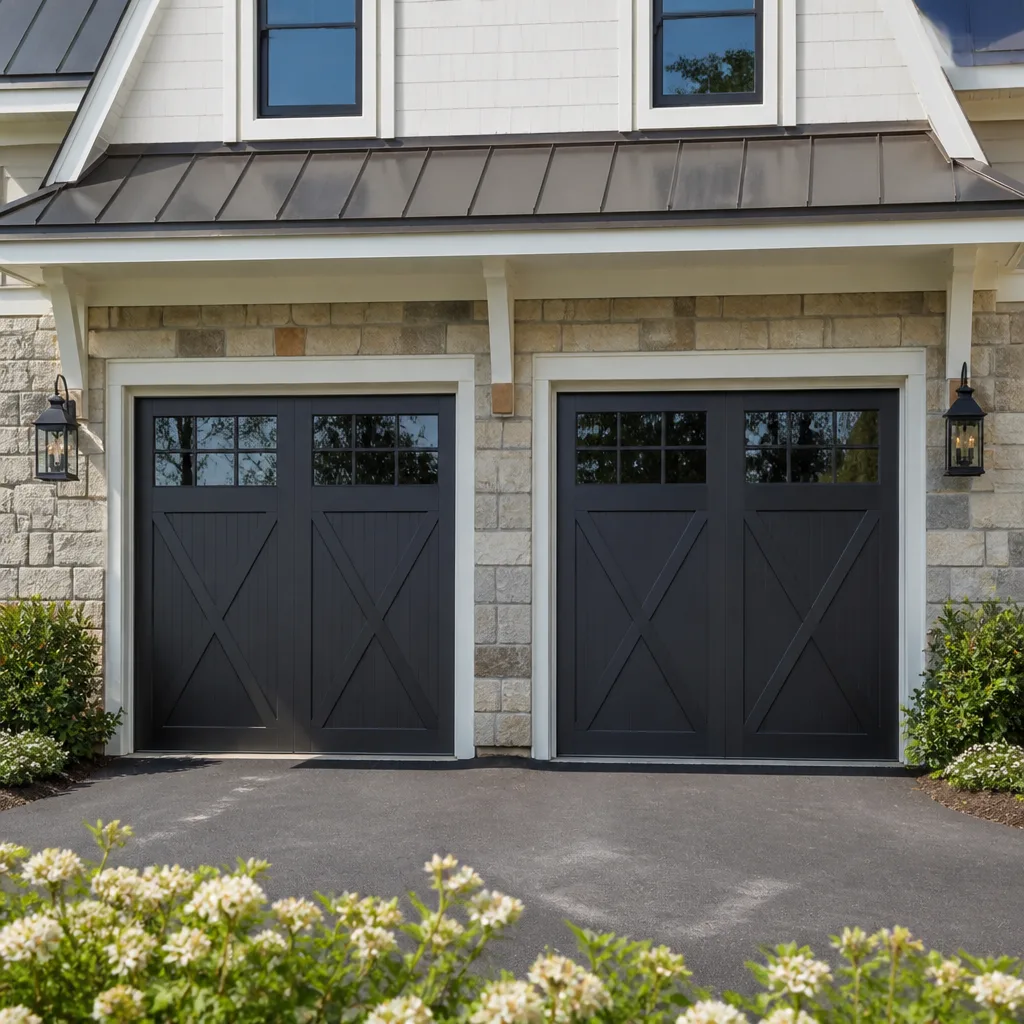 Carriage house
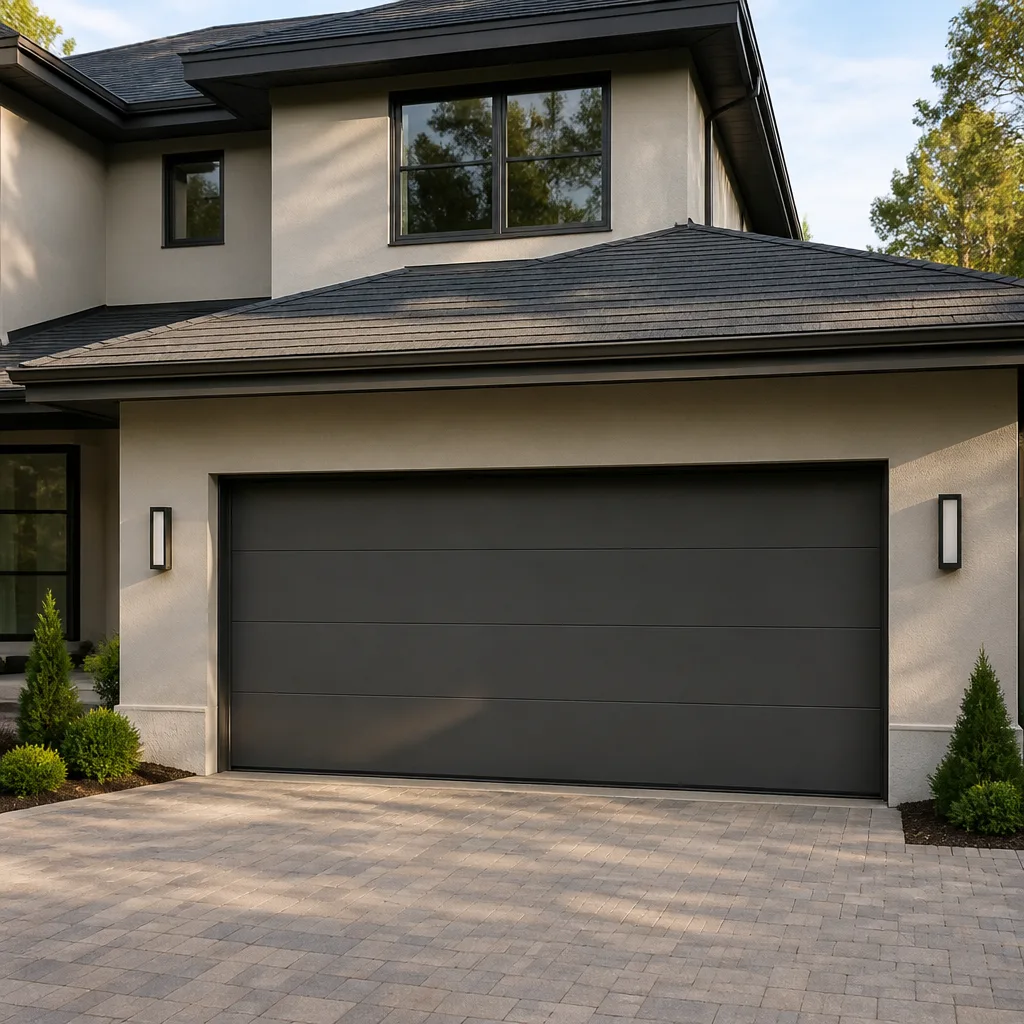 Modern flush
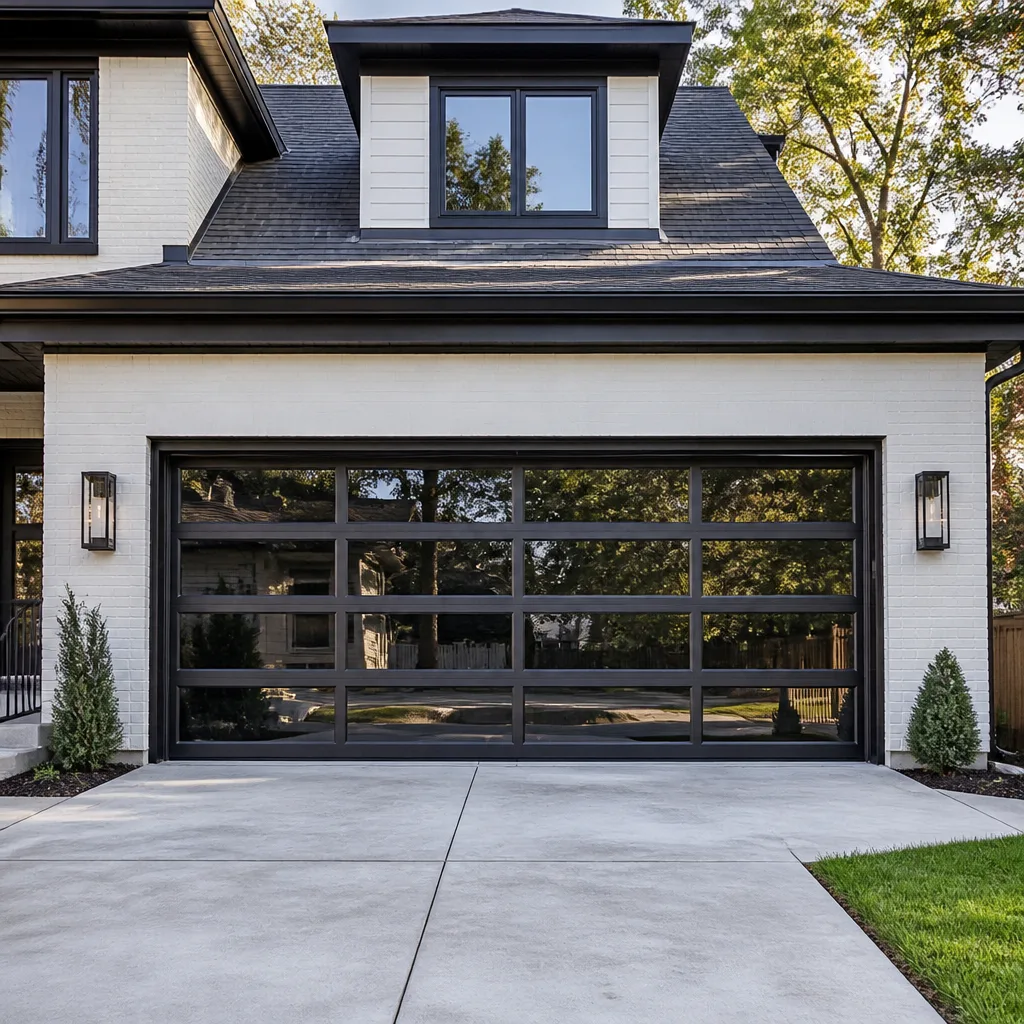 Full-view glass
 LiftMaster openers
 Chamberlain openers
Full 25-point door and opener safety check with every visit - springs, cables, rollers, tracks, and your LiftMaster or Chamberlain opener included
You get a price before we start. It does not change when the pro arrives.
Get your free estimateGarage Door Warning Signs: A Cape Coral Homeowner’s Reference Guide
Most warning-sign lists tell you to watch for a door that won’t open or a noise loud enough to wake the house. By the time either happens, you’re already in an emergency. The signals that actually matter in Cape Coral show up weeks earlier and sound like nothing: a door that’s a little slower than it used to be, a faint drag near the top of the travel, a thin line of rust on a spring you’ve never looked at closely. This guide covers those early signals, how to tell cosmetic wear from structural trouble, and which problems are genuinely yours to fix and which belong to a trained technician. Read it once now and you’ll know your door well enough to catch the next failure before it strands your car. We work on doors across Cape Coral every week, and the pattern is consistent.
Quick Answer
The main garage door warning signs are a door that moves unevenly or slower than it used to, grinding or popping sounds during travel, rust that has moved beyond the surface of springs or cables, an opener that strains or reverses for no clear reason, and loose or corroded anchor hardware. In Cape Coral, the most serious of these is spring fatigue, because a weakened torsion spring usually fails completely within weeks of the first symptoms. Any sign that involves springs, cables, or the door’s bracing should be inspected by a trained technician rather than adjusted at home.
Styles & brands we work with
- Raised-panel steel
- Carriage house
- Modern flush
- Full-view glass
- LiftMaster openers
- Chamberlain openers
Table of Contents
- Normal Sounds vs. Stress Sounds in a Humid Climate
- Reading Rust: Cosmetic Staining vs. Structural Corrosion
- Asymmetrical Movement and What It Means Mechanically
- When the Opener Is Blaming the Door
- The Wind-Load Integrity Check
- Spring Fatigue: The Signal That Matters Most
- A Seasonal Walk-Around for Cape Coral Homes
- Common Mistakes to Avoid
Normal Sounds vs. Stress Sounds in a Humid Climate
A healthy garage door is not silent. It clicks as the rollers enter the curve of the track, hums as the motor runs, and thumps softly when it settles on the floor. Those are the sounds of hardware doing its job. The sounds you want to pay attention to are the ones that are new, that repeat in the same spot every cycle, or that showed up gradually enough that you can’t remember when they started.
Humidity changes how a door sounds. In a Cape Coral summer, the steel track expands and contracts with daily temperature swings, and rollers that ran clean in drier weeks can start to drag by mid-afternoon. That’s not automatically a failure. What separates normal seasonal noise from stress noise is repetition and location. If the sound happens at the same point in every cycle, something is wearing at that point.
Listen for these specifically:
- A sharp pop or bang from the center of the door, once at the start of travel. This often points to a torsion spring that has lost tension or a cable that has slipped a drum.
- A grinding sound that gets louder as the door rises. Usually a roller bearing or a dry hinge, but occasionally a sign the track has shifted out of alignment.
- A rhythmic squeak tied to door speed. Rollers or the opener’s rail, and usually the least urgent of the group.
- A single loud crack followed by the door becoming very easy to lift by hand. This is a broken spring. Stop using the door and call for help.
The distinction matters because sound is often the only warning you get before a spring fails. In our experience, a door that has started popping at the same point in travel is usually closer to a failure than the homeowner expects. If a sound repeats, it’s worth having it looked at rather than waiting for the door to stop working. One call to Cape Coral Garage Door Repair Pros is enough to get a trained eye on it.
Reading Rust: Cosmetic Staining vs. Structural Corrosion
Rust on a garage door is normal. Rust that has compromised a spring, cable, or bracket is not. The trick is knowing the difference before it becomes a repair that could have been a replacement part. Humidity in Cape Coral keeps metal surfaces damp for long stretches of the year, and that moisture accelerates oxidation on any component that isn’t well coated.
Start with the parts that carry load. Springs, cables, bottom brackets, and the hinges that connect panels all take stress. Surface rust on a painted panel is cosmetic and can be sanded and repainted. Rust that has started to pit the metal, or that has visibly narrowed a cable, is a different story.
Here’s how we tell them apart:
- Look at the color. A light orange-brown haze on a painted surface is surface rust. Dark brown or black rust, especially with flaking, means the metal underneath is being eaten.
- Run a finger along the spring coil (with the door closed and power off). If the surface feels rough or gritty, pitting has started. Smooth surface staining is the mild case.
- Check the cables at the bottom corners. Cables should look like tight bundles of wire with no fraying. Any visible broken strand, or a cable that has thinned noticeably, is a replacement signal.
- Inspect the bottom brackets and hinges. Corrosion that has reached the screws or the pivot points usually means the hardware is due for replacement.
- Look behind the tracks. Rust streaks on the wall or the track mounting points can indicate standing moisture or a leak you hadn’t noticed.
If you find pitting on a torsion spring or any fraying on a cable, stop operating the door. Springs and cables are under extreme tension and can cause serious injury if they let go during an inspection or a DIY adjustment. This is the part of the door where a trained technician earns their keep. Certified fluency across brands like LiftMaster, Chamberlain, Genie, and Clopay means we can identify the exact spring or cable spec for your door rather than guessing.
Asymmetrical Movement and What It Means Mechanically
A door that rises or falls unevenly is telling you something specific: the load is not being carried evenly across the system. The motor may still be strong enough to force the door up, which is why many homeowners wait. But uneven travel accelerates wear on the rollers, the tracks, and eventually the panels themselves, and it usually traces back to one of a handful of causes.
The most common mechanical causes of asymmetrical movement:
- A weakened torsion spring on one side of a two-spring setup. The door lifts more on the strong side, and you can often see the gap at the top of the door when it’s partly open.
- A slipped or stretched cable. The drum on one side has more slack, so it releases faster than the other.
- A bent or misaligned track. The door catches on one side and lags on that edge.
- A failing roller or hinge on one side. Friction builds up on the affected corner.
In Cape Coral, the most common asymmetrical pattern we see follows months of small seasonal movement in the tracks. Warm, humid weeks followed by cooler stretches cause slight shifts at the mounting points, and over time one track can drift a fraction out of parallel. That’s usually fixable with a realignment, but it should be checked alongside the springs and cables. If you’re seeing uneven rise, our team can walk you through garage door repair options for the surrounding area as well.
Two things to watch for that mean stop using the door today. If one side of the door is clearly higher than the other when fully closed, so daylight is visible along the bottom, the door is no longer sealing and the load imbalance is severe. If the door twists visibly at any point in the travel, stop and call. A door that comes off a track under tension is dangerous.
When the Opener Is Blaming the Door
This is the single most useful thing a homeowner can learn from this guide. Many “my opener is broken” calls turn out to be doors that have become too heavy for a perfectly healthy opener. The opener is doing what it was designed to do: it senses resistance and reverses or stops. Replacing the opener in that situation fixes nothing and usually breaks the new opener too.
How to tell whether the problem is the opener or the door:
- Disconnect the opener. Pull the emergency release cord so the door runs free of the motor.
- Lift the door by hand. A properly balanced door should lift with moderate effort and stay put when you let go at about halfway up. If it slams down or is very hard to lift, the door is out of balance and the opener is not the problem.
- Check the reversal. If the door goes up a few inches and reverses, and it does so with the same pattern after you reset the opener, the safety sensors or the door balance are the more likely causes.
- Watch the wall control. Rapid flashing lights on a LiftMaster or Chamberlain wall unit usually indicate a sensor issue rather than a motor failure.
For belt-drive openers in the Chamberlain and LiftMaster family, which are common in Cape Coral homes built over the last two decades, the diagnostic codes are usually clear enough to point at either a sensor problem or a load problem. That’s the value of working with a specialist. If your opener is struggling, our garage door opener repair work starts with the diagnosis, not with a parts order. We test the door balance first, because replacing a motor that wasn’t broken is a costly way to discover the real problem.
The Wind-Load Integrity Check
Cape Coral homes are built to resist high winds, and the garage door is the largest opening on most houses. When the door is rated for wind load, that rating depends on the door staying anchored, its reinforcement staying intact, and its hardware staying sound. A door that has worked perfectly for years can quietly lose that integrity as anchors corrode and bracing loosens. We can’t give you a pass or fail grade from a visual check, and we won’t pretend to. What we can give you is a list of what a trained technician looks at when assessing the door’s anchoring and reinforcement.
What to look at, with the door closed:
- The anchor bolts at each track. Count them and see if any are loose, rusty to the point of thinning, or missing. Retrofitted hardware should match what the door was originally engineered for.
- The horizontal reinforcement struts across the back of the door. If a strut is bent, missing fasteners, or pulling away from the panel, the door’s wind resistance is compromised.
- The center bracket and its mounting. The torsion bar is anchored through this bracket. Loose mounting here is a serious sign.
- The bottom brackets and their attachment to the door. These carry the cable tension and are a load point during wind events.
- The door’s label or rating plate. It should still be legible so the door’s wind rating can be confirmed against local requirements.
If anything in that list is loose, missing, or corroded, have it looked at by a trained technician. We work on doors across Cape Coral, and reinforcement and anchor checks are part of the standard inspection when a door shows signs of movement or wear. If the door needs to be replaced because its reinforcement is beyond repair, our garage door installation work includes matching the new door’s wind rating to what your home requires. When it comes to a door’s wind rating and local code, ask your city’s building department directly; they are the authority on what your property needs.
Spring Fatigue: The Signal That Matters Most
A torsion spring has a designed cycle life. Every open and close is one cycle. When a spring reaches the end of that life, it fails, usually with a sharp bang, and the door becomes dead weight. The problem is that the failure doesn’t come out of nowhere. Springs lose tension gradually, and the door gets heavier in small increments that a homeowner can adapt to without noticing.
What spring fatigue looks like before the break:
- The door is slower on the way up. The opener is working harder to lift a door that has become heavy.
- The opener strains or pauses at the midpoint. If it never did this before, and the door is well balanced otherwise, the springs are a likely cause.
- You can lift the door by hand with one hand easily. That sounds good, but on a door with two springs, it often means one spring has already broken. A quick visual check while the door is closed can show a gap in the coil of one spring.
- A popping or banging sound at the start of travel. Tension is being released unevenly, usually a sign the spring is close to failure.
We handle torsion and extension spring work as part of our core service, and it’s the job where we’re most often called after a failed DIY attempt. Springs are wound under a great deal of tension. If one lets go while you’re winding it, the tool and the spring can both strike you. That’s the entire reason this job belongs to a trained technician. Our technicians have up to 15 years of experience, and spring work is a routine part of their day, not a sideline. If your door is slower than it used to be, call and get it checked before the spring fails. Call (877) 792-6011. We answer 24/7. Fast dispatch from 7am to 7pm, Sunday through Friday.
A Seasonal Walk-Around for Cape Coral Homes
Doing a short walk-around twice a year is enough to catch most of what this guide covers. The two natural checkpoints are entering hurricane season and leaving it. Here’s the list we use:
- With the door closed, look at the gap along the bottom. Daylight or a visible gap at one corner means the door is out of balance or the seal is shot.
- Run the door up and down once while watching each track. Any wobble, jump, or noise at one point in travel is worth a closer look.
- Inspect the springs visually. Look for gaps in the coil, dark rust, or grease streaks that have appeared since the last check.
- Look at the cables at both bottom corners. Fraying, kinks, or a cable that is slack against the drum are signals to stop and call.
- Check the anchor bolts and the horizontal struts. Wobble or a missing fastener is worth a service call.
- Disconnect the opener and lift the door by hand. It should feel manageable and hold position halfway up.
- Test the photo-eye safety sensors. Wave an object in front of them while the door is closing. The door should reverse.
- Run the manual release test. Make sure the release cord works cleanly and reengages properly.
Write down anything that changed since the last check. Small changes are easier to notice with a written record, and a technician can compare notes rather than starting from scratch.
Common Mistakes to Avoid
- Replacing a healthy opener because the door is heavy. A struggling opener is usually trying to tell you the door is out of balance. Replacing the motor without checking the door just buys a more expensive repeat of the same problem.
- Adjusting a torsion spring without a winding bar and training. This is the most dangerous job on a garage door, and Cape Coral homeowners who try it are the most common source of serious spring-related injuries we hear about. Leave spring work to a trained technician.
- Sanding and repainting over rust without checking the springs and cables. Cosmetic fixes are fine on panel steel, but if the rust started on a load-bearing part, painting over it hides the failure rather than fixing it.
- Ignoring an uneven door as a “minor” issue. A door that rises unevenly puts extra load on the poles, the tracks, and the opener. What starts as a small tracking problem becomes a full door adjustment or a panel replacement.
- Relying on the door’s original wind rating after visible wear. A rating only applies as long as the anchor hardware and bracing stay intact. Loose bolts and bent struts mean the door no longer performs to its label.
- Using the door after a loud bang and a “free” lift. If a spring has just broken, the door is unbalanced and dangerous. Stop using it and call for repair.
- Assuming an unfamiliar brand means you need a generalist. A specialist who works across LiftMaster, Chamberlain, Genie, Clopay, Amarr, Wayne Dalton, Craftsman, and Raynor can diagnose the door without a trial-and-error approach that replaces parts one at a time.
See the difference
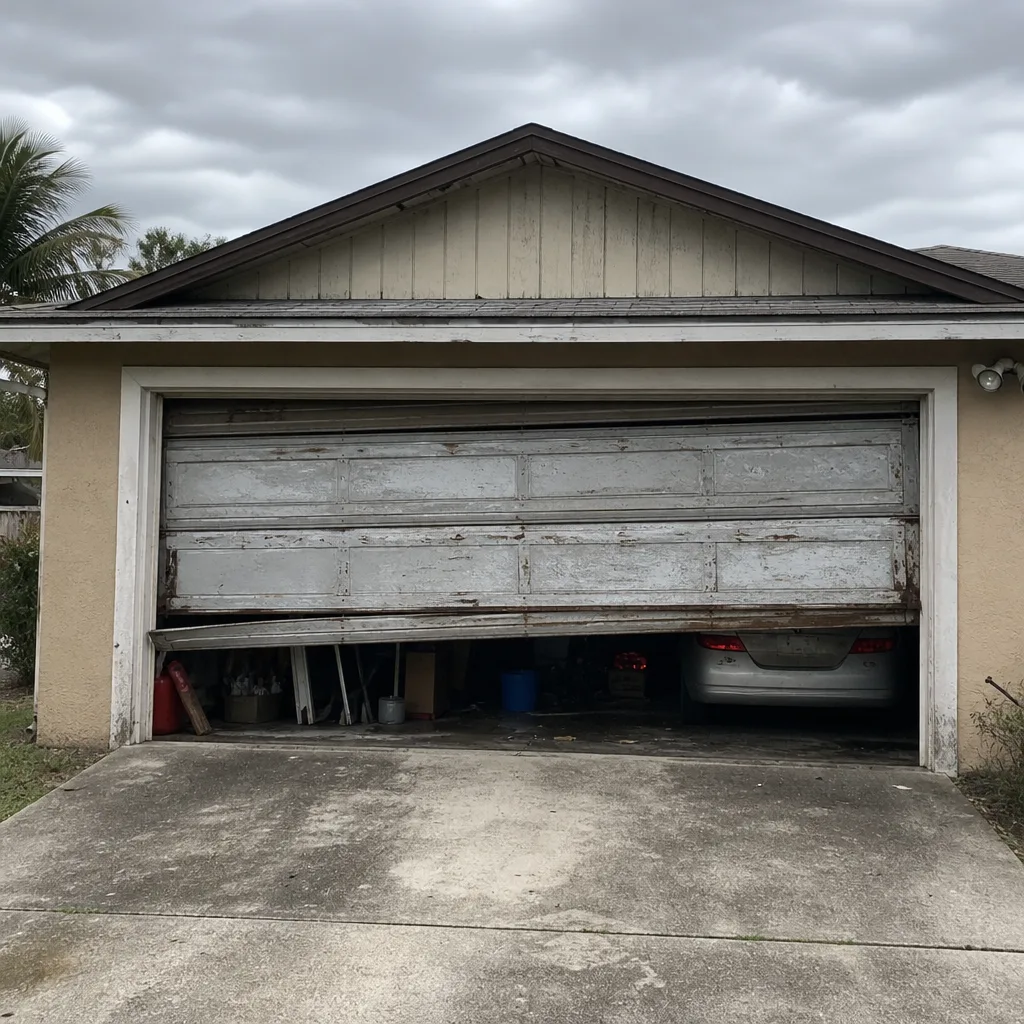 Before
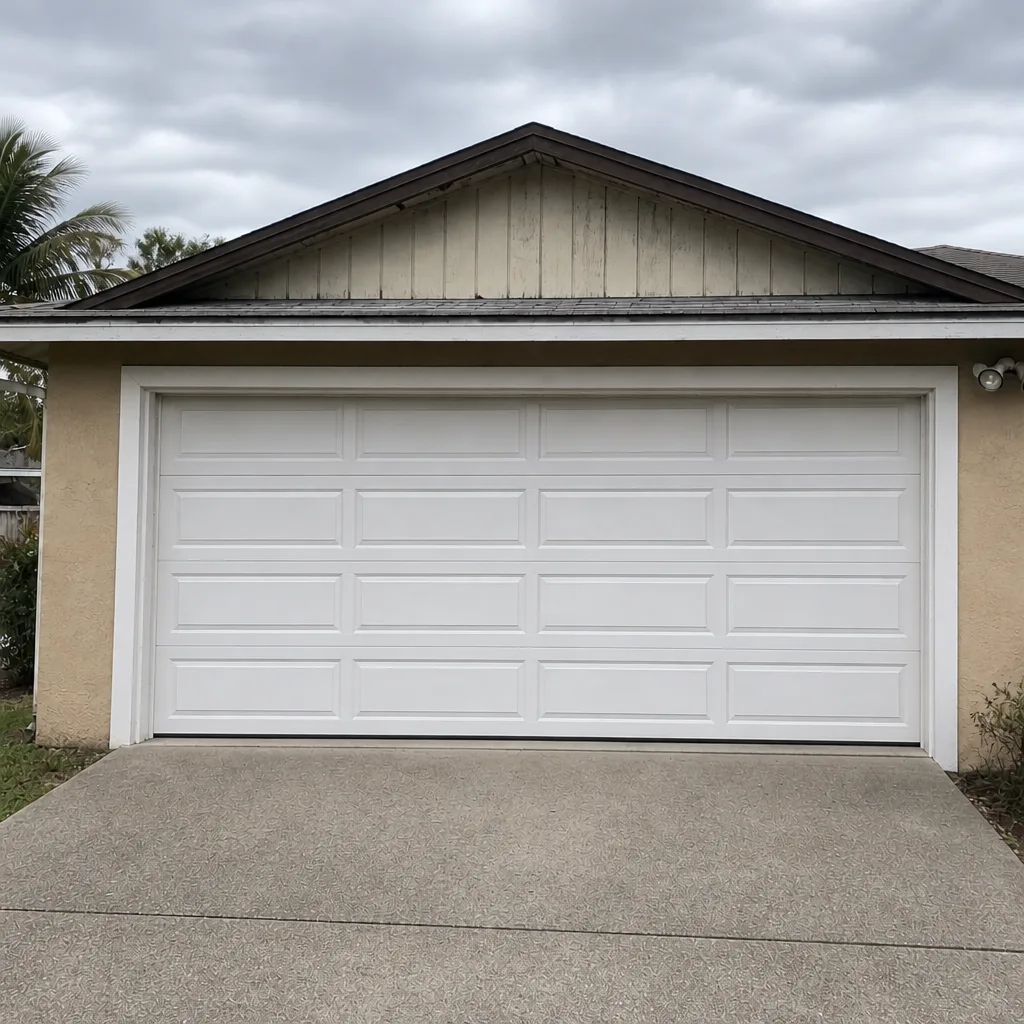 After
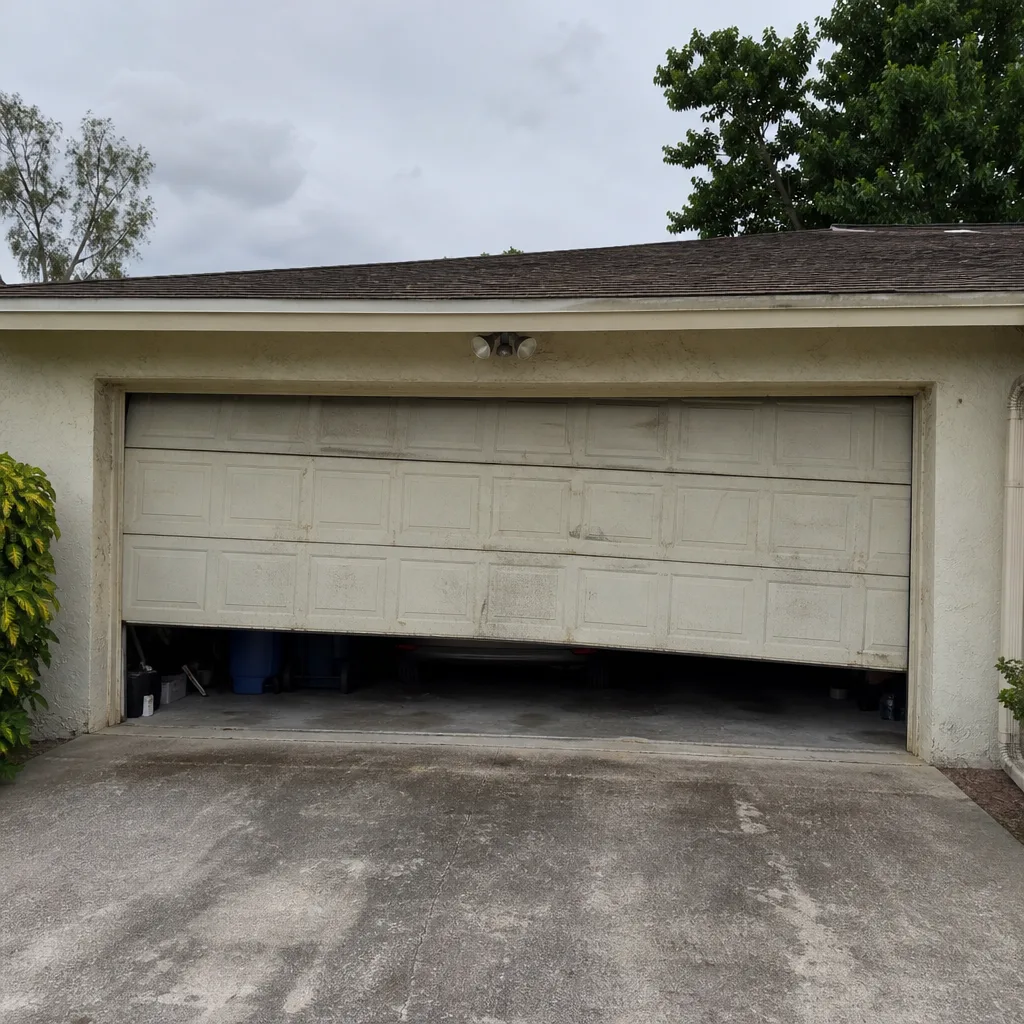 Before
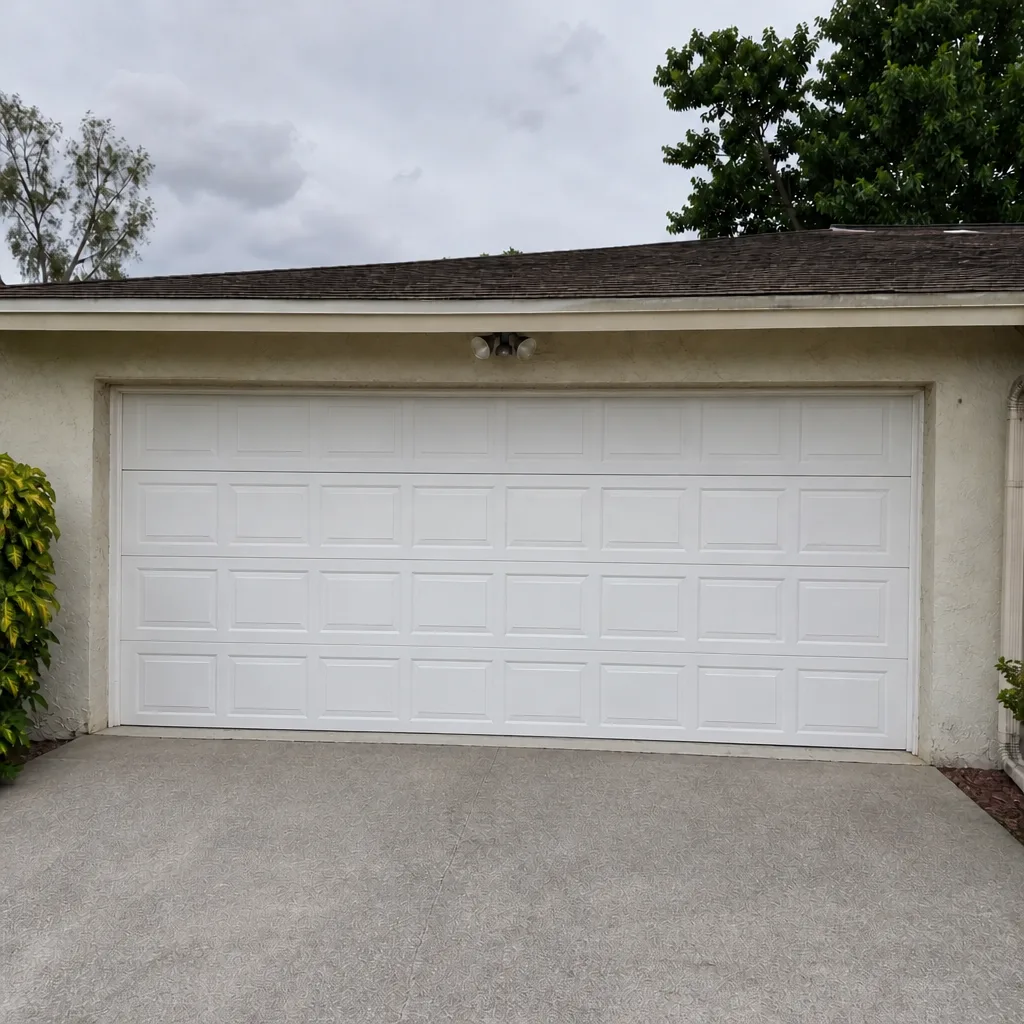 After
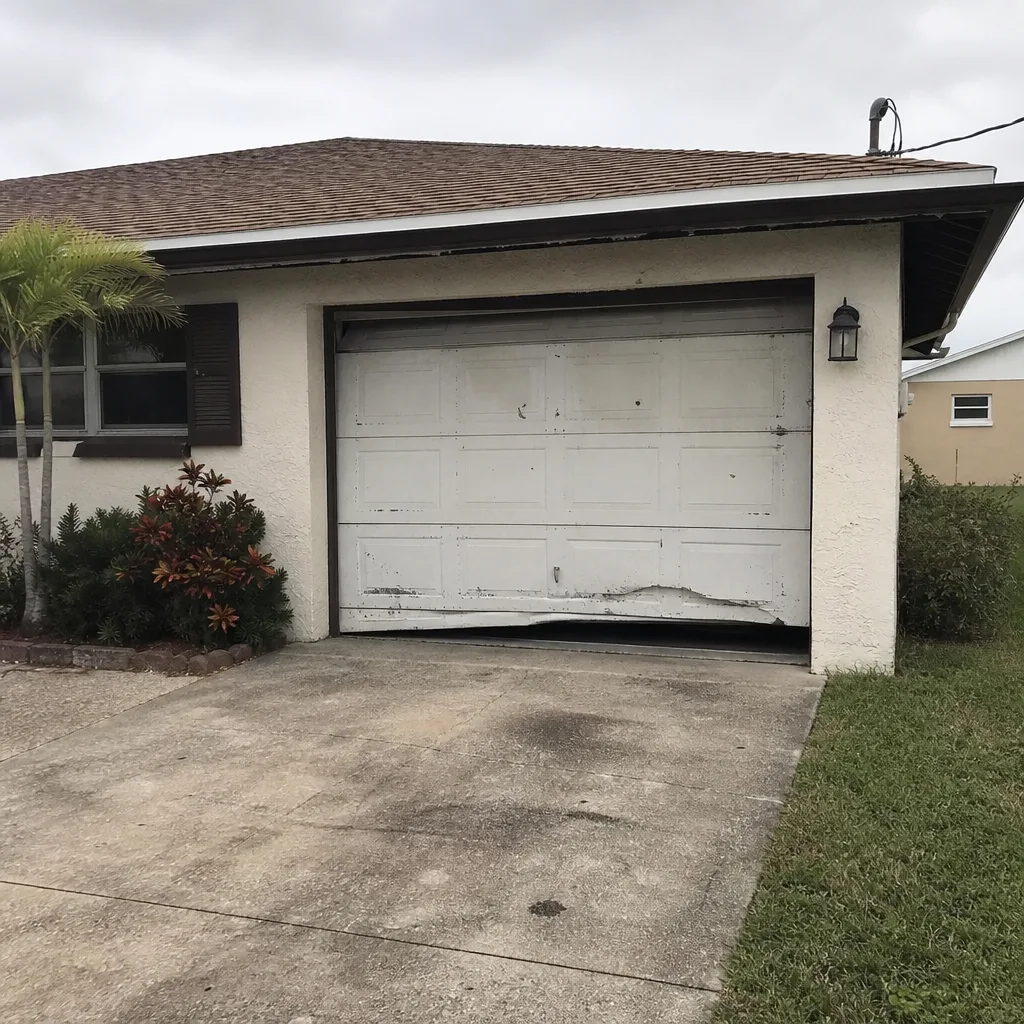 Before
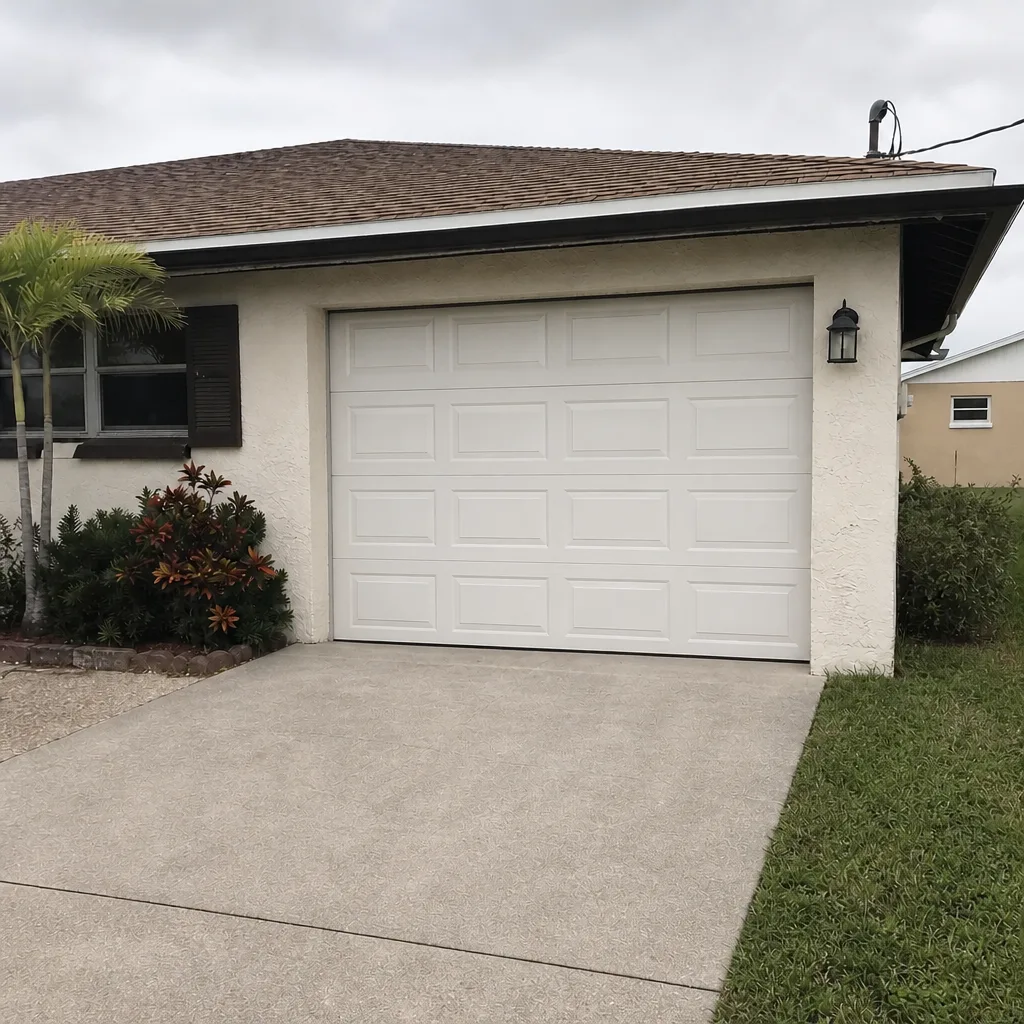 After
When to Call a Professional
Call a professional if any of the following apply: your door is slower or heavier than it used to be, one side is rising or falling unevenly, you’ve heard a sharp pop or bang from the door, you see fraying on a cable or a gap in a spring coil, the anchor hardware or horizontal struts are loose, or your opener has started reversing or straining for no clear reason. Spring and cable work is under extreme tension and belongs to a trained technician. Cape Coral Garage Door Repair Pros offers free estimates in Cape Coral, and we work on all 8 major residential brands so diagnosis happens the first time. Call (877) 792-6011. We answer 24/7. Fast dispatch from 7am to 7pm, Sunday through Friday.
Frequently Asked Questions
The first sign is usually a door that moves more slowly or feels heavier than it did a few weeks earlier. A popping sound at the start of travel, a visible gap in the spring coil, and an opener that strains at the midpoint all point to a spring that is close to failing. In Cape Coral’s humidity, surface rust on the coil accelerates this. Call (877) 792-6011 for an inspection before the spring breaks; estimates are free.
Disconnect the opener with the manual release and lift the door by hand. If it’s very heavy, or it drops rather than staying halfway, the door is out of balance and the opener is not the problem. A balanced door lifts with moderate effort and holds position. If the door is balanced and the opener still reverses or strains, the issue is with the opener or its sensors. Call (877) 792-6011 for a free estimate.
No. Torsion and extension springs are under extreme tension, and a spring that releases during a home repair can cause serious injury. Even experienced technicians use winding bars and specific procedures to handle them safely. If you suspect a spring problem, stop using the door and call (877) 792-6011. Estimates are free.
Twice a year is a good rhythm, timed around hurricane season. One walk-around as the season approaches and one after it ends catches almost every early warning sign. The inspection covers springs, cables, anchors, tracks, and a manual balance test. If something has changed since the last check, call (877) 792-6011 and let a technician look. Estimates are free.
Uneven rise means the load is not being carried evenly across the system. The most common causes are a weakened spring on one side of a two-spring setup, a slipped cable, a bent track, or a failing roller. Uneven travel puts extra wear on the tracks and panels, so it’s worth fixing before the damage spreads. Call (877) 792-6011 for a free estimate.
Only if its reinforcement and anchor hardware are intact. A wind rating depends on the door, the bracing, and every anchor staying in place. Corroded anchors, loose struts, or bent horizontal reinforcement mean the door may no longer perform to its original rating. Have it inspected before storm season. For local code specifics, ask your city’s building department. Call (877) 792-6011 for a free estimate.
The Bottom Line
The warning signs that matter most are the ones that show up quietly: a door that’s slower, a spring that’s stained instead of bright, a small wobble in one track, an opener that reverses when it didn’t used to. In Cape Coral, spring fatigue is the signal to take most seriously, because a weakened spring usually fails completely within weeks of the first symptoms. Check the door twice a year, stop using it if something is uneven or broken, and leave spring and cable work to a trained technician. A few minutes of attention twice a year is far cheaper than an emergency spring replacement.
If you’ve noticed any of the signs in this guide, call Cape Coral Garage Door Repair Pros at (877) 792-6011 for a free estimate. We answer 24/7. Fast dispatch from 7am to 7pm, Sunday through Friday. We work on LiftMaster, Chamberlain, Genie, Clopay, Amarr, Wayne Dalton, Craftsman, and Raynor systems, so the first call is usually the only one you’ll need to make.
Written by the team at Cape Coral Garage Door Repair Pros.