
Last updated November 21, 2026
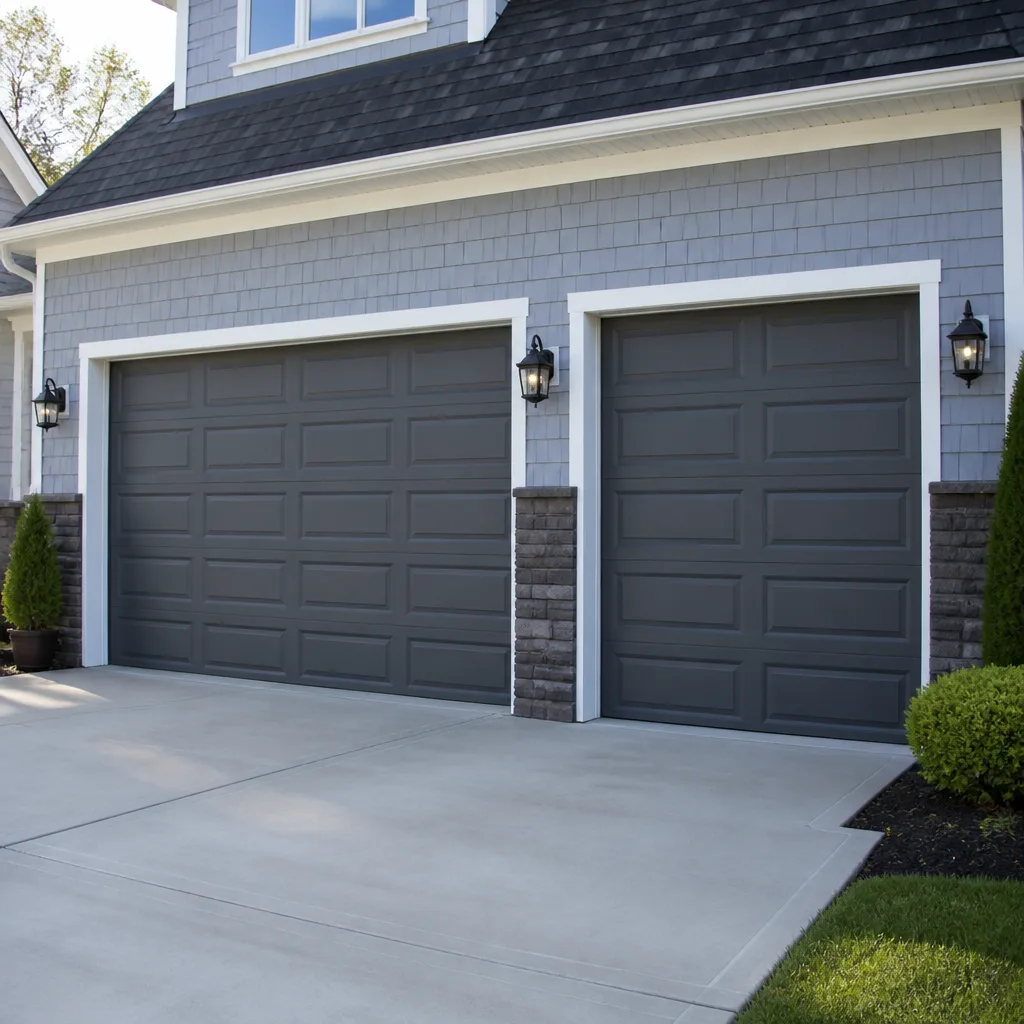 Raised-panel steel
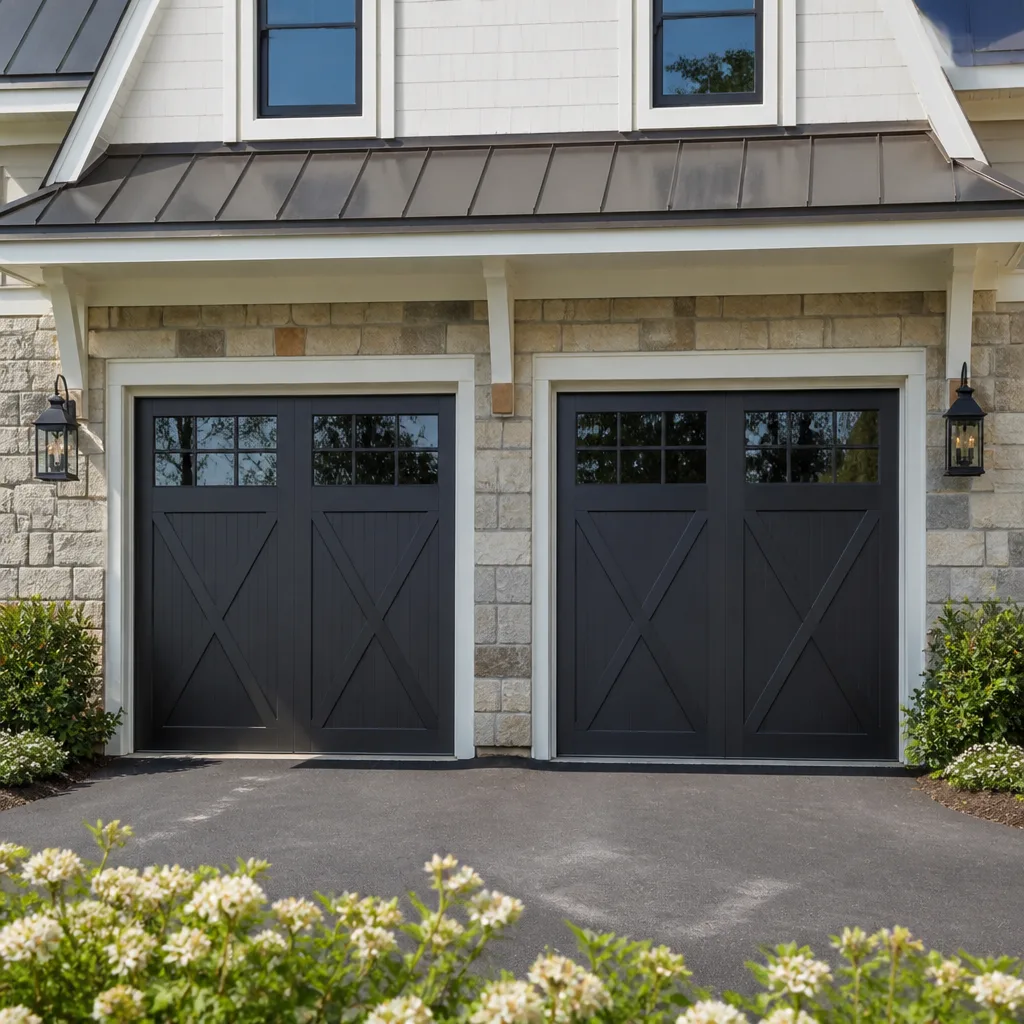 Carriage house
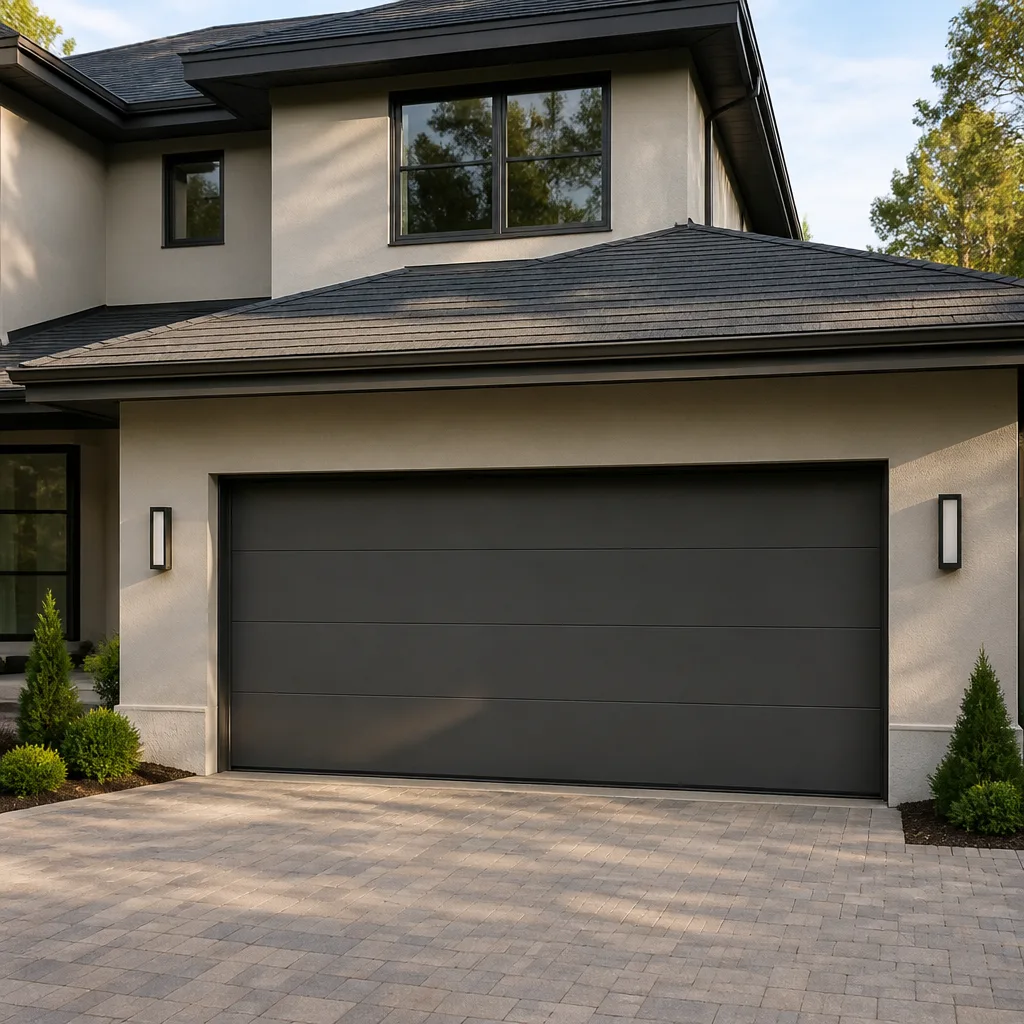 Modern flush
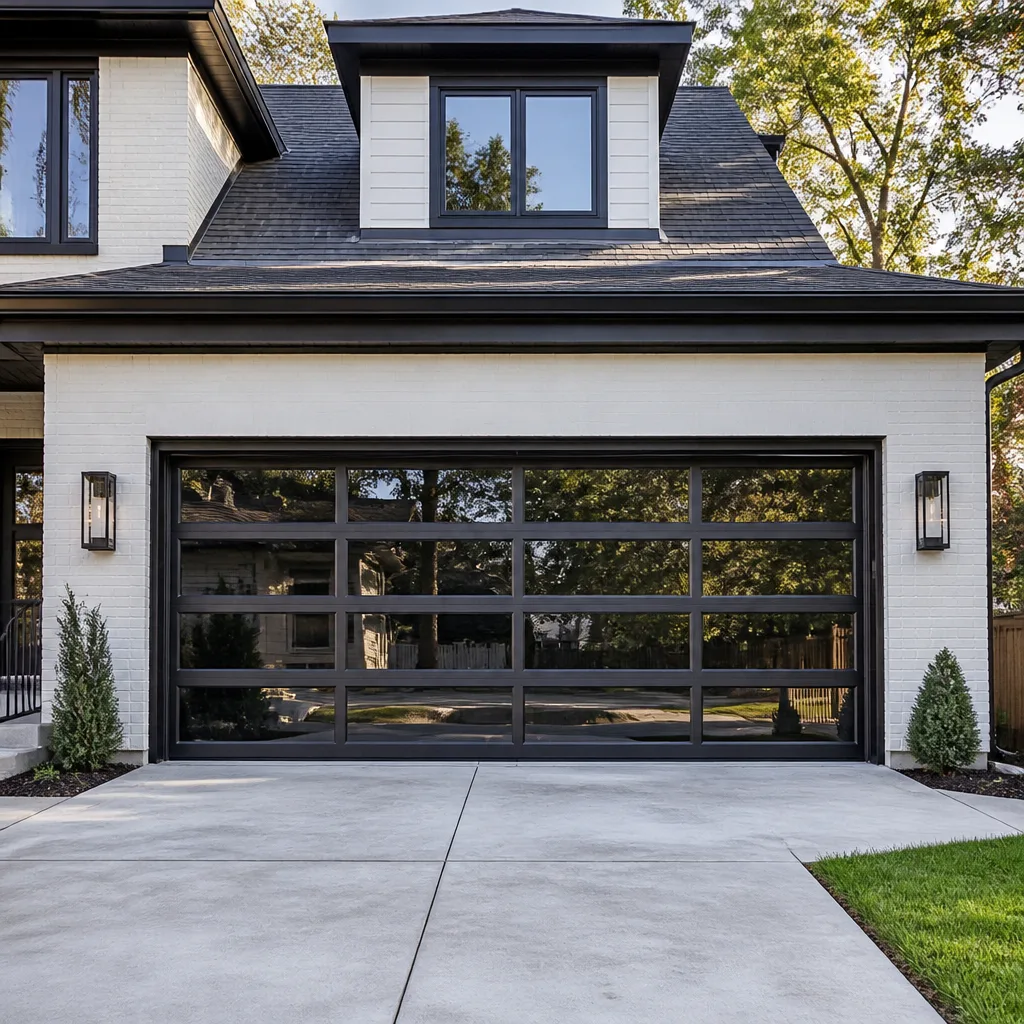 Full-view glass
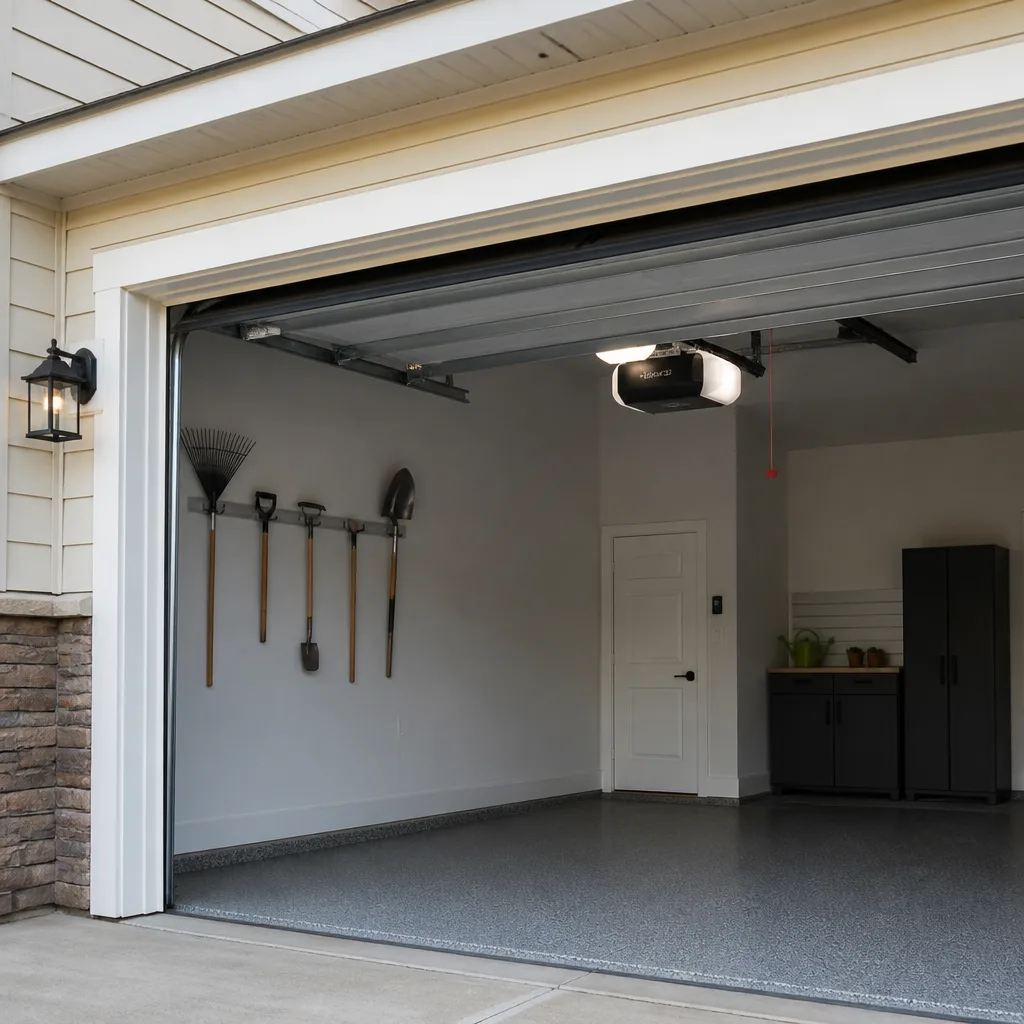 LiftMaster openers
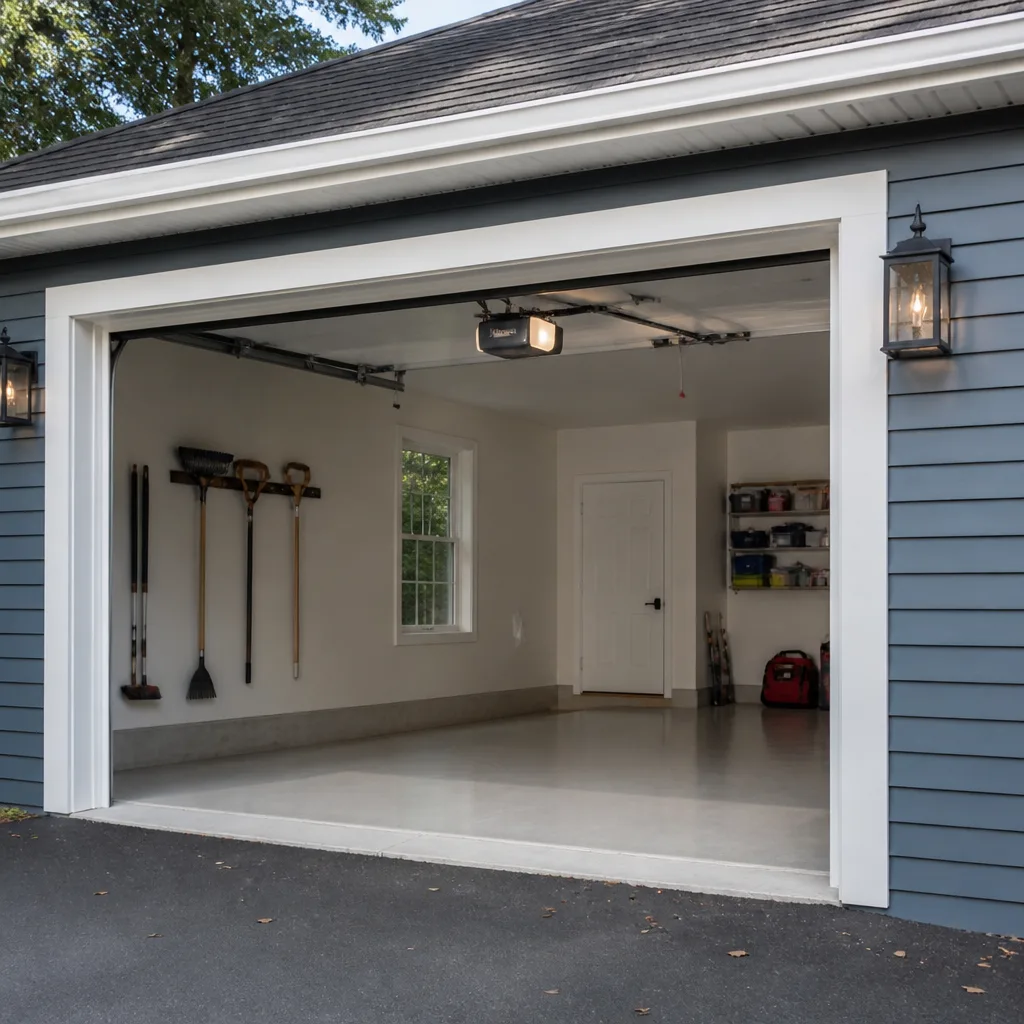 Chamberlain openers
Full 25-point door and opener safety check with every visit - springs, cables, rollers, tracks, and your LiftMaster or Chamberlain opener included
You get a price before we start. It does not change when the pro arrives.
Get your free estimateSeasonal Garage Door Care for Cape Coral: Year-Round Homeowner’s Guide
Most garage door maintenance advice you’ll find online was written for a place with four real seasons, which makes it close to useless in Cape Coral. Telling a homeowner here to winterize the door or clear snow and ice off the tracks misses the point entirely. The real risk calendar in Cape Coral runs on two distinct stress periods: hurricane season from June through November, and a dry, high-UV stretch from February through May that quietly ages seals, paint, and opener electronics. This guide walks through both, plus the rainy-season drainage and humidity issues that sit between them, so you can check the right things at the right time of year instead of running through a generic checklist that doesn’t match your climate.
Quick Answer
Garage door care in Cape Coral follows two seasonal stress windows, not four. Pre-hurricane prep in May should focus on wind-load hardware, track alignment, and testing the emergency release; February through May is when UV and heat degrade seals and strain openers. Run a short inspection at each of those points, add a post-storm check after any named system, and watch for spring tension drift during the humid summer months. That cycle, repeated annually, covers nearly everything a residential door in Cape Coral actually needs.
Styles & brands we work with
- Raised-panel steel
- Carriage house
- Modern flush
- Full-view glass
- LiftMaster openers
- Chamberlain openers
Table of Contents
- Why Cape Coral’s Climate Calendar Beats the Four-Season Model
- The May Pre-Hurricane Season Checklist
- Post-Storm Inspection: What to Check After a Tropical System
- The Dry-Season UV and Heat Protocol (February to May)
- How Summer Humidity Affects Torsion Spring Tension
- Rainy-Season Drainage and the Door Bottom Seal
- Opener Care Through Both Seasons
- Brand-Specific Notes for Cape Coral Doors
Why Cape Coral’s Climate Calendar Beats the Four-Season Model
Cape Coral gets hot, humid summers and warm, dry winters, which means the door experiences two broad stress regimes rather than four transition periods. Hurricane season, running June through November, is the obvious one. The less obvious one is the dry stretch from February through May, when intense sun and dry heat work on seals, paint, and opener electronics. The humidity spikes of summer and the heavy rain events that come with them affect different components again. Once you map the year to those windows, the maintenance schedule stops being guesswork.
The reason this matters is that different materials fail on different timelines. Rubber and vinyl seals bake under UV and crack from the outside in. Black-painted steel panels absorb far more solar heat than light-colored doors and expand against their neighbors. Opener motors and control boards run hotter in an unventilated garage, which is a real problem in a Cape Coral garage that doubles as a laundry room and storage closet. Torsion springs are steel wire under huge stored force, and they don’t care about UV, but they do respond to the temperature and moisture swings around them.
What this guide replaces is the standard “spring and fall tune-up” advice. In Cape Coral, the equivalent two checkpoints fall in May (just before the first tropical systems) and February (before the dry heat ramps up). Two checkpoints a year, timed to your climate, do more good than four checkpoints timed to a homeowner’s calendar in Ohio.
The May Pre-Hurricane Season Checklist
Doing this in May gives you time to fix what you find before a system is bearing down on Cape Coral, when parts and service calls are harder to book. The goal is to make sure the door holds its building envelope when wind pressure arrives, and to make sure you can still open it by hand if the power is out for days.
- Inspect the hinges, rollers, and track brackets. Look for loose fasteners, elongation at screw holes, and any bracket that has pulled away from the jamb or header. Loose hardware is the most common source of a door shifting under load.
- Check track alignment. Tracks should be plumb and parallel. A track that has drifted will bind the door on the way up and can be forced further out of alignment under stress. Measure the gap between the door edge and the track on both sides.
- Verify the wind-load hardware condition. If your Cape Coral home was built to current wind-load standards, the door assembly has specific hardware rated to hold panels in place. Check that no bolt, strap, or bracket has corroded, backed out, or been removed during a prior repair.
- Test the emergency release. Pull the release cord with the door closed, lift the door by hand, and confirm it moves smoothly up and down. Then re-engage it with the door in the down position and cycle the opener once to confirm the trolley reconnects.
- Verify the reversing safety. Place a piece of wood on the floor in the door’s path and confirm the door reverses on contact. Also test the photo-eye sensors by blocking the beam.
- Check the panel fasteners and bottom seal. A seal that has cracked will not keep the wind or rainwater out. Fasteners that have rusted through should be replaced.
If anything on this list is beyond what you can safely inspect, don’t improvise. Tracks and brackets are one thing; springs and cables are another, and those are covered below. For a full inspection of the wind-rated hardware on your specific door, Cape Coral Garage Door Repair Pros can look it over before the season starts.
Post-Storm Inspection: What to Check After a Tropical System
After any tropical system passes through Cape Coral, most homeowners check the door visually, decide it looks fine, and move on. That misses the damage that matters. The door can look perfectly normal and still have a bent track, a stressed torsion spring, or a misaligned sensor that will show up weeks later. The non-obvious checks below catch the things a glance won’t.
- Open and close the door manually first. Pull the emergency release and lift the door by hand. It should move smoothly and stay roughly where you leave it when halfway up. A door that feels heavy, jerks, or won’t hold position has a spring or balance problem.
- Inspect the tracks with a straight edge. A storm can shift a track by a fraction of an inch without a visible dent. Run a straight edge or level along the inside of both vertical tracks and look for any point where it rocks.
- Check the header and jamb mounting. Look at where the torsion shaft, the center bearing plate, and the side brackets attach to the building. Any gap, cracked caulk line, or movement at those anchors is a structural sign and needs professional attention.
- Test the safety reverse and the photo-eye alignment. Wind can knock a sensor slightly out of aim. Both sensors should show a solid indicator light and the door should reverse on obstruction.
- Look at the bottom seal and floor contact. The door should sit flush against the floor across its full width, with no daylight showing underneath.
- Inspect the opener rail and trolley. A rail that has shifted can cause the trolley to bind, which will burn out the opener motor later.
If the manual lift test feels heavy or jerky, stop using the door and have it looked at. The springs can be the reason, and they are covered in detail further down. For a post-storm assessment of any brand of door, garage door repair is the right starting point. It’s a quick check that can save you an expensive surprise later in the season.
The Dry-Season UV and Heat Protocol (February to May)
This is the window most Cape Coral homeowners ignore, and it’s where a lot of quiet damage happens. Between February and May the sun is strong and direct, humidity is lower, and the door runs hotter than at any other point in the year. The three things to watch for are seal degradation, panel expansion, and opener thermal issues, especially on dark-colored doors.
Seal degradation. The bottom seal, the perimeter weatherstripping, and the seal between panels are all rubber or vinyl. UV exposure causes the surface to dry, crack, and eventually split. Once the bottom seal cracks, rainwater can get under the door during a heavy rain, and the seal no longer cushions the door’s impact with the floor. Check seals in February and again at the end of the dry stretch.
Panel expansion gaps. Black-painted steel panels absorb a lot of solar heat and expand more than light-colored doors. The gaps and joints between panels can open up slightly under that expansion, which allows a small amount of play and rub. If you notice a door that rattles or rubs at the joints on hot afternoons, that is usually the cause. It’s not urgent, but it’s worth checking that the hinge screws are tight.
Opener thermal shutdown. An opener motor in a Cape Coral garage that is not well ventilated runs hotter than it should. Most openers have thermal protection that will pause the motor if it gets too hot after a run of cycles. If your opener stops partway through a cycle on hot afternoons and starts again after a while, that is likely what’s happening. Check that the opener housing isn’t blocked and that the garage has some airflow. If the behavior continues outside the hot stretch, the opener needs a diagnostic. Raynor and LiftMaster openers both have their own thermal behavior, and a brand-aware technician can tell the difference between a thermal pause and a failing control board.
How Summer Humidity Affects Torsion Spring Tension
Torsion springs are steel, and steel moves with temperature and moisture. Through Cape Coral’s humid summer, the spring coil absorbs some of that moisture at the surface, and the daily heat cycle expands and contracts the metal slightly. Over a full season, that cycle rarely causes a spring to break without warning, but it can drift the calibrated tension enough that the door feels off-balance, opens a bit heavier, or sits a touch higher or lower than it used to when fully closed.
What that means for a homeowner is that the door may feel slightly different in August than it did in April, without any single failure. A door that is properly balanced should hold position when released halfway up. If it slams down or drifts up, the balance has changed. On a door with extension springs, that’s often a stretched spring; on a torsion setup, it’s usually a tension change that needs adjustment.
This is where the safety warning matters most. Torsion springs are under enormous stored force, and adjusting them requires specific winding bars, a knowledge of how many turns correspond to what door weight, and a clear understanding of the failure mode if a spring is released wrong. We’ve seen more than a few doors where a homeowner tried a YouTube adjustment and ended up with a snapped spring, damaged cables, or worse. Springs are the dangerous part of this job, so we recommend having a trained technician calibrate the tension rather than handling it yourself.
If your door is a single spring setup with one large torsion spring on the shaft, the replacement range is typically $180 to $340 per spring. A matched pair is usually replaced together when both springs have the same age, so the pair costs about twice that. The written estimate sets the final price. On any door, spring adjustment and replacement is the job to hand to a professional rather than attempt on your own.
Rainy-Season Drainage and the Door Bottom Seal
Cape Coral’s heavy summer rain events put a specific stress on the garage floor and the bottom seal. The garage floor should slope slightly toward the driveway so water that gets past the door can drain out, but a lot of Florida garages have a floor that’s flat or slopes the wrong way, and homeowners never notice until rain season arrives. When the bottom seal is intact, that slope hardly matters. When the seal has cracked or compressed, water gets under the door, pools against the interior of the seal, and eventually works into the garage.
What to check before rain season:
- Daylight test. Close the door at night with a light on inside the garage. Look along the bottom edge from outside for any light showing through.
- Floor slope check. Pour a small amount of water on the garage floor near the door. It should run toward the driveway, not into the garage.
- Bottom seal condition. Feel along the bottom edge of the seal. Any crack, split, or section that feels hard rather than spongy needs replacing. This is an inexpensive part and one of the highest-value fixes on the whole door.
- Threshold condition. Some Cape Coral garages have a raised threshold under the door. Check that the seal actually compresses against it when the door closes.
If the door sits unevenly or the seal doesn’t make contact across the full width, that’s usually a balance or track alignment issue rather than just a worn seal. A door that has drifted off-level will wear out its new seal in a single season.
Opener Care Through Both Seasons
Your opener does the most mechanical work of any part of the system, and the two seasonal windows put different demands on it. In dry season, heat is the issue; in rainy season, humidity and power fluctuations are. A short check at each season keeps the opener reliable through years of cycles.
- Test the safety reverse at both seasonal checkpoints. It is the single most important safety feature on the opener.
- Clear the opener housing of dust, cobwebs, and any stored items pressing against it. Airflow matters more than people think.
- Check the rail and trolley for tightness. A loosened rail will throw off the opener’s travel limits.
- Listen to the opener. Grinding, clicking, or a strain sound that wasn’t there last season is an early sign of gear or bearing wear.
- Test all remotes and the wall control at each season. A remote that has suddenly lost range is usually a battery or a radio interference issue, not a failed opener.
If you have a LiftMaster or Chamberlain opener with a smart-home hub, test the app connection at the start of each season as well. When connection issues turn out to be more than a router problem, garage door opener repair covers the electronics side as well as the mechanical.
Brand-Specific Notes for Cape Coral Doors
Most garage doors in Cape Coral fall into a handful of major brands, and each has its own failure points and replacement parts. Knowing your brand narrows down what to check and speeds up any repair.
- LiftMaster and Chamberlain openers. Both run on the myQ ecosystem, so seasonal checks should include the app connection and the wall control, not just the mechanicals. LiftMaster’s belt and chain drives have specific tension specs, and Chamberlain’s newer openers run a DC motor that behaves differently in heat.
- Genie openers. The screw-drive units need the screw lubricated periodically; without it, the opener starts to sound strained as the seasons turn.
- Raynor doors. Raynor panels and hardware vary by model line, so the right replacement seal or hinge is model-specific. Knowing the model number before a repair saves a return trip.
- Clopay, Amarr, Wayne Dalton, and Craftsman. All four appear commonly on Cape Coral homes, and each has its own panel and hardware line. The right bottom seal or hinge for one brand is not interchangeable with another.
Because Cape Coral has a mix of older and newer construction, a single street can have doors from four different manufacturers with entirely different hardware. That’s part of why a brand-aware technician is worth the call. For a full replacement or a door that has aged out of economical repair, garage door installation is the next step, and the right brand and model can be chosen during a free measure.
Common Mistakes to Avoid
- Using a four-season checklist in a two-season climate. Winterizing steps and freeze-thaw advice do nothing for a Cape Coral door and waste time you could spend on the checks that matter. Skip the generic list and follow the two-window calendar in this guide.
- Skipping the emergency release test before hurricane season. A door that can’t be lifted by hand after a power outage isn’t just inconvenient, it’s a real problem if you need to move a vehicle. Test it in May and again after any storm.
- Ignoring the bottom seal until rain season. A cracked seal is the cheapest part on the door and the one that causes the most water intrusion in Cape Coral. Replace it in dry season rather than after the first heavy rain.
- Trying to adjust torsion springs. Springs are under enormous stored force and are the most dangerous part of the door. A DIY adjustment is one of the few ways to turn a working door into a genuine injury risk. Leave it to a technician.
- Running the opener on a door with a balance problem. If the door is heavy or jerky in manual mode, cycling the opener will wear out the motor and gears faster than it wears out anything else. Fix the balance before running the opener again.
- Skipping the post-storm check on the tracks and header anchors. A track can shift by a fraction of an inch under storm stress and not show any visible damage. A straight-edge check catches it before it becomes a binding problem.
- Assuming a dark-colored door needs the same care as a light one. Black-painted panels absorb much more solar heat and expand more. In Cape Coral’s dry season that means the joints and hinges deserve a closer look on a dark door than on a light one.
See the difference
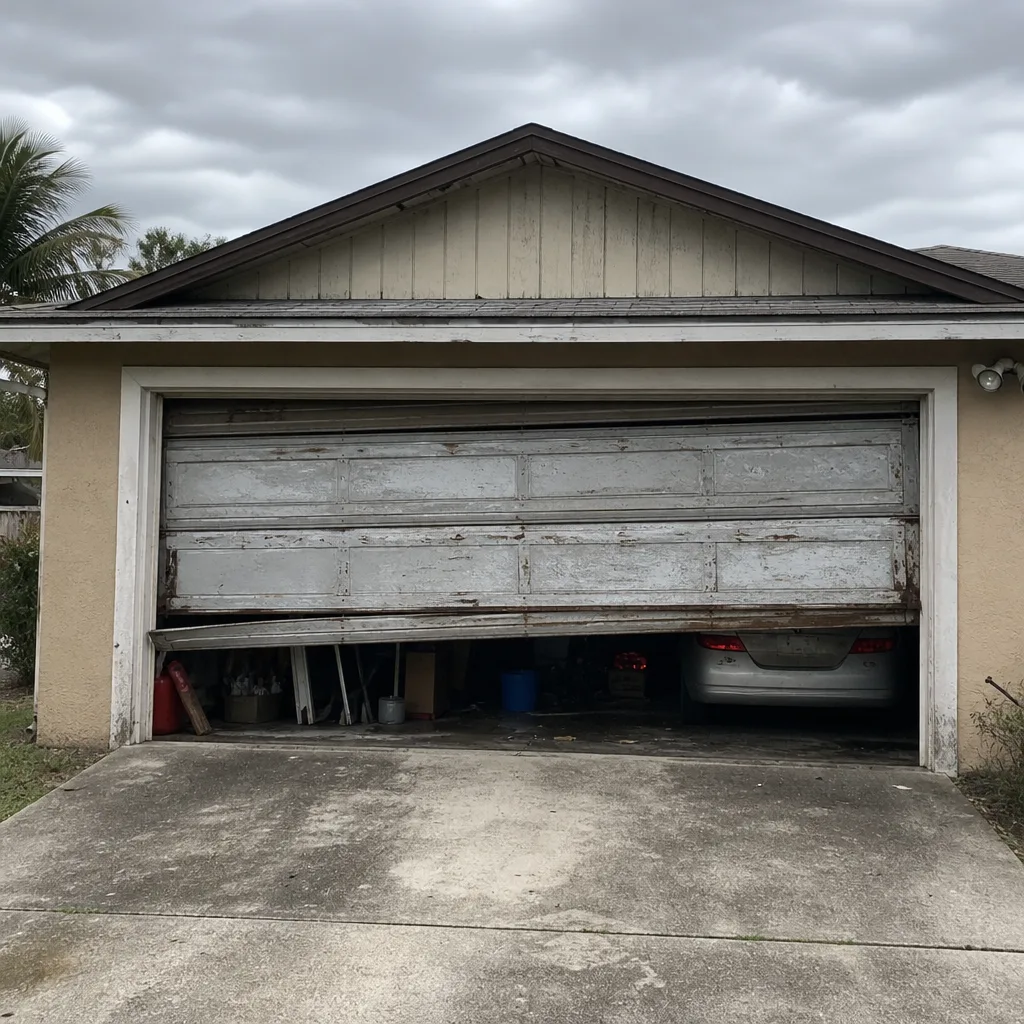 Before
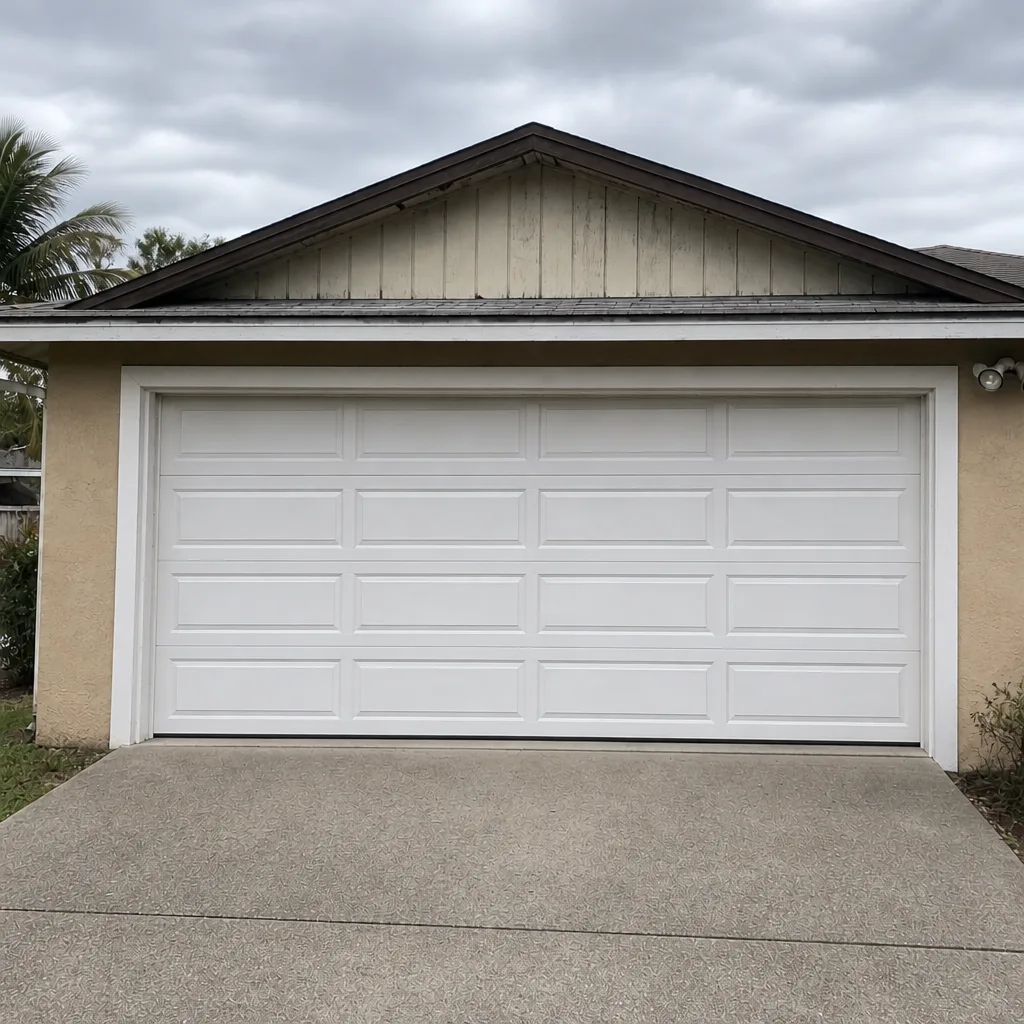 After
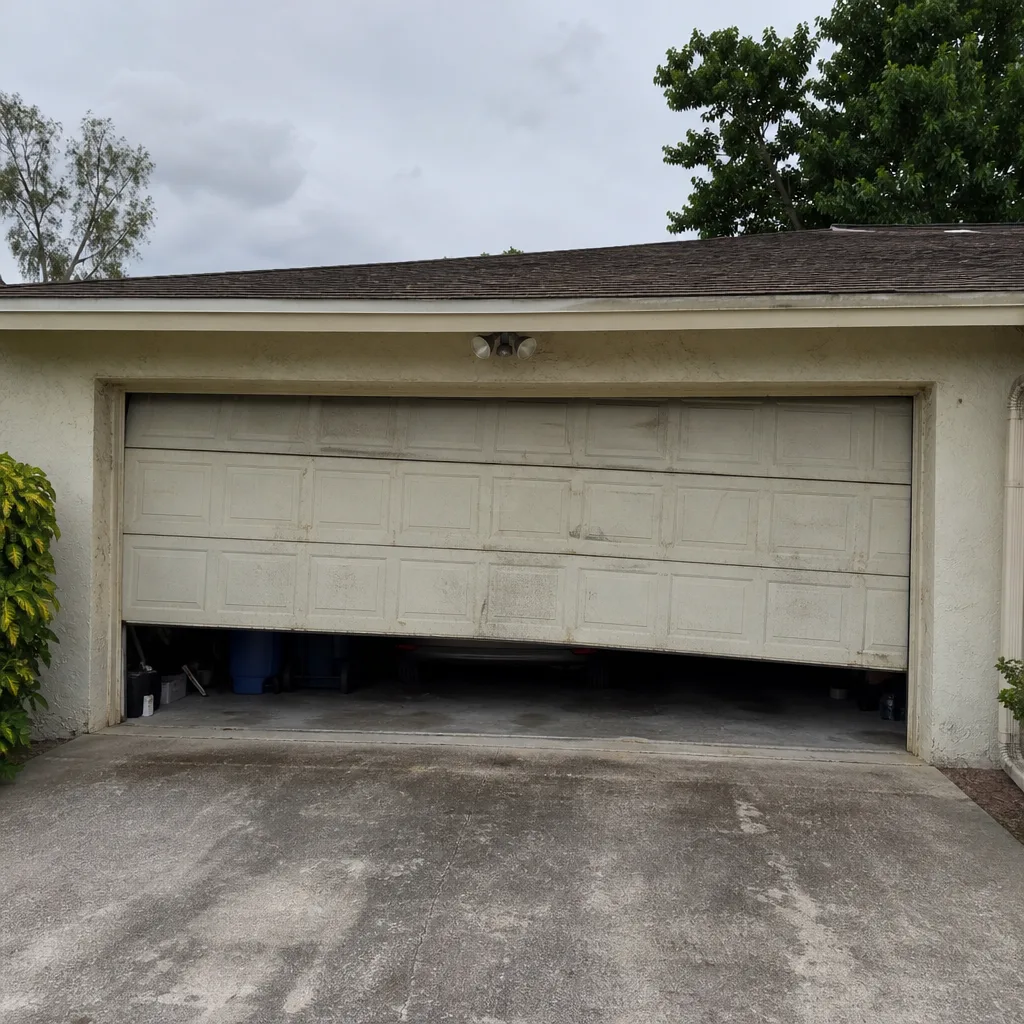 Before
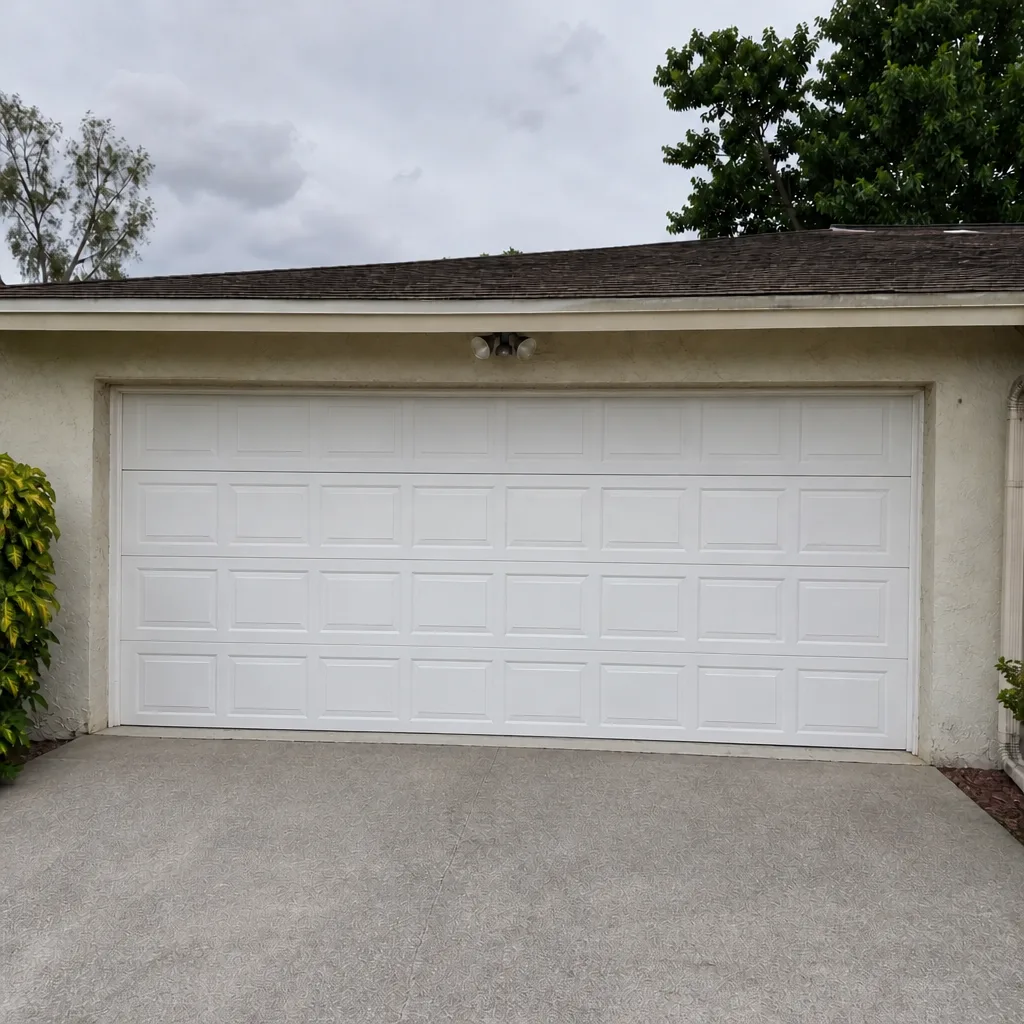 After
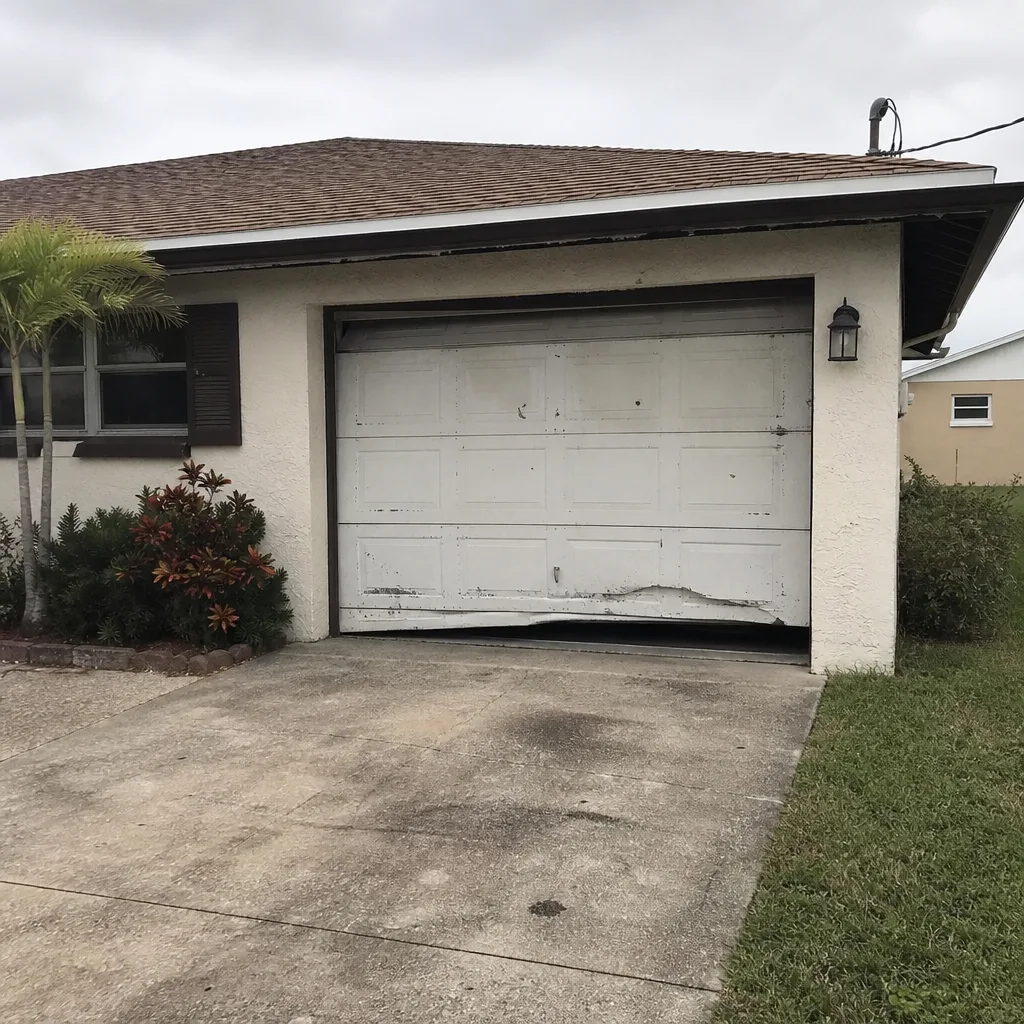 Before
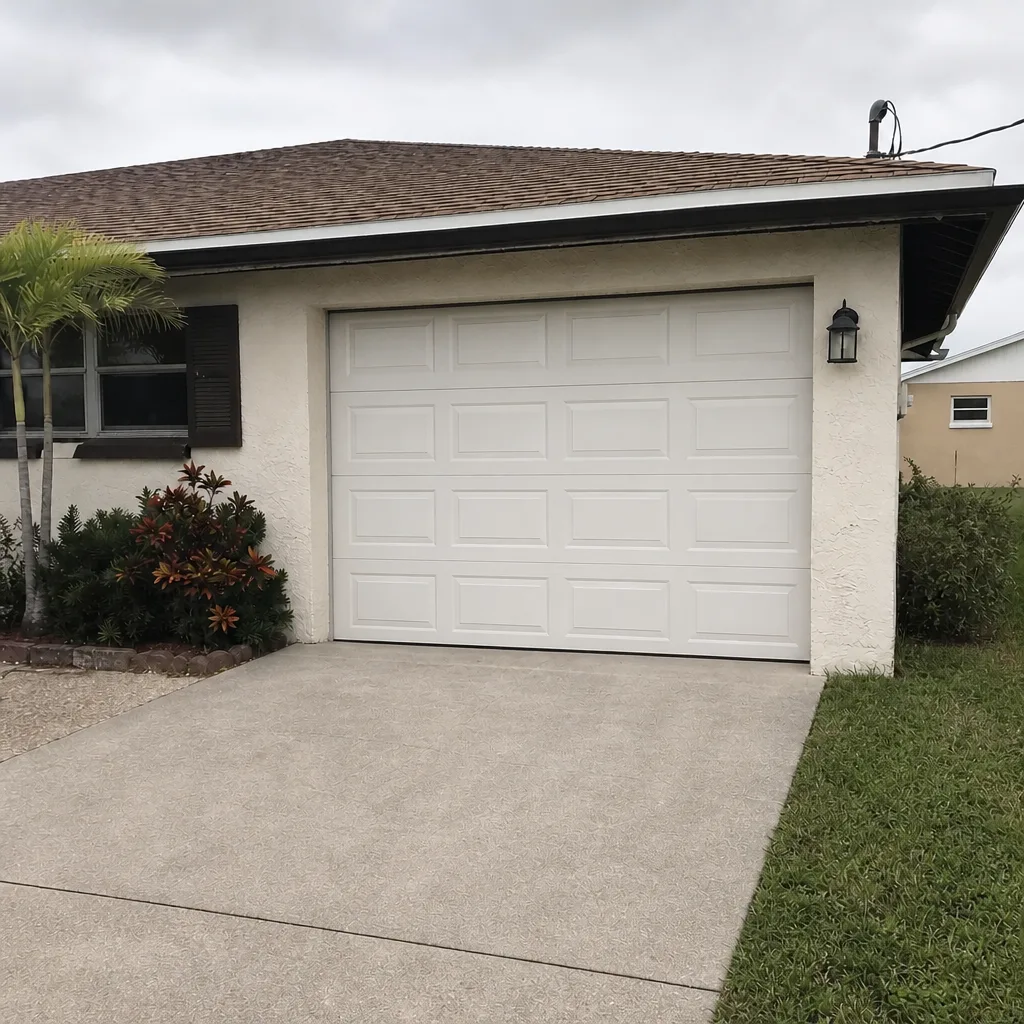 After
When to Call a Professional
Some garage door work is fine to do yourself, and some is not. Replacing a bottom seal, tightening a hinge screw, testing the safety reverse, and clearing dust from the opener are all reasonable homeowner tasks. What’s not worth the risk is anything that involves the springs, cables, or the door’s balance. Torsion springs and their cables are under extreme force, and the most common serious injury in this trade comes from a homeowner attempting a spring adjustment without the right tools or training.
Call a professional if the door feels heavy or jerky in manual mode, if a spring or cable looks damaged, if the door is off-level, if the opener stops partway through a cycle, or if any part of the track or header anchor has shifted. Post-storm, that list grows: any change in how the door opens or closes is worth a look before you trust it through the next system.
Cape Coral Garage Door Repair Pros offers free estimates in Cape Coral. Call (877) 792-6011. We answer 24/7. Fast dispatch from 7am to 7pm, Sunday through Friday.
Frequently Asked Questions
Twice a year, timed to the two stress periods rather than the four seasons. May, just before hurricane season, is the right time for the full hardware and safety check. February, before the dry UV and heat stretch, is the right time for the seal and opener inspection. Add a post-storm check after any tropical system, and you’ve covered everything the climate asks for. Call (877) 792-6011 for a free estimate.
Yes, and the reason is the building envelope. A garage door that fails under wind pressure is a large opening into the structure, so the door, its tracks, and its hardware all need to be in condition. The May checklist in this guide covers the parts to inspect: hinges, track alignment, wind-load hardware, and the emergency release. A professional inspection before the season starts is the safest way to confirm the door is ready.
Yes, and you should test it before every hurricane season. Pull the release cord with the door closed, lift the door by hand, and confirm it moves smoothly. Then re-engage it with the door down and cycle the opener once to confirm the trolley reconnects. If the manual lift feels heavy or jerky, stop and call a professional, because that usually points to a spring or balance issue. Call (877) 792-6011 for a free estimate.
Typical estimates in Cape Coral run $180 to $340 per spring. A matched pair is usually replaced together when both springs have the same age, so a pair is about twice that. The written estimate sets the final price, and the price is quoted and agreed before any work starts. Call (877) 792-6011 for a free estimate.
That’s usually the thermal protection in the opener pausing the motor after the motor gets too hot. Cape Coral garages that aren’t well ventilated get very hot in dry season, so this is more common here than in cooler climates. Check that the opener housing isn’t blocked and that the garage has some airflow. If it keeps happening outside the hot stretch, the opener needs a diagnostic. Call (877) 792-6011 for a free estimate.
In Cape Coral, yes, a bit more attention is worth it. Dark panels absorb much more solar heat, which means more expansion at the joints and hinges during the dry stretch. Check the hinge screws and the panel joints in March or April, and watch for rubbing or rattling on hot afternoons. If something feels off in the way the door moves, that’s worth a call. Call (877) 792-6011 for a free estimate.
What should I check on my door after a tropical storm passes?
Open and close the door manually first. A door that feels heavy or won’t hold position has a balance problem and needs a professional look. Then check the tracks with a straight edge, the header and jamb mounting, the safety reverse, the photo-eye alignment, and the bottom seal contact. Any change in how the door moves is worth a call before the next system comes through.
The Bottom Line
Cape Coral’s climate asks for two maintenance checkpoints, not four: a May hardware and safety check before hurricane season, and a February seal and opener check before the dry, high-UV stretch. Add a post-storm assessment after any tropical system, watch the spring tension through the humid months, and keep the bottom seal and floor slope working through rain season. That’s the whole seasonal cycle, and it’s a fraction of the work of the four-season routine most garage door guides will hand you. If anything on the list points to a spring, a cable, or the door’s balance, call a professional. Call (877) 792-6011 for a free estimate. We answer 24/7. Fast dispatch from 7am to 7pm, Sunday through Friday.
Written by the team at Cape Coral Garage Door Repair Pros.